Blog

  • Firms with more female executives ‘perform better’

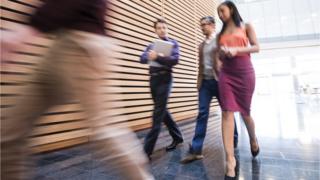
    men and women in office

    Image copyright
    Getty Images

    London-listed companies are more profitable when women make up more than one in three executive roles, according to new research.

    Listed firms where at least one-third of the bosses are women have a profit margin more than 10 times greater than those without, it suggests.

    Of the 350 largest companies listed, just 14 are led by women, according to gender diversity business The Pipeline.

    15% of companies in the FTSE 350 have no female executives at all.

    The group’s co-founder Lorna Fitzsimons said having more women in the decision-making room means businesses are better able to understand their customers.

    The Pipeline’s Women Count 2020 report “shows the stark difference in net profit margins of companies that have diverse gender leaderships compared to those who do not,” she said.

    The Pipeline says London-listed companies with no women on their executive committees have a net profit of 1.5%, whereas those with more than one in three women at that level reach 15.2% net profit margin.

    The report also points out that in the largest 100 London-listed companies, the total number of female chief executives is the same as the number of bosses named Peter – six.

    When it comes to chief financial officers in those firms, fewer than two out of 10 are women, while men make up 96% of investment managers.

    The sectors with the lowest number of women in executive roles are construction and retail.

    “If you look at retail, entry level jobs are usually 80% women,” Ms Fitzsimons said. “But they don’t make it to the executive level.”

    Former Prime Minister Theresa May, who contributed to the report, said there can be no good explanation for the massive underrepresentation of women at the top of British business.

    “Every single male CEO who looks around his boardroom table to see nine out of 10 male faces staring back at him needs to ask himself what he is doing to make his business one which his daughter or granddaughter can get on in,” she wrote.

    Image copyright
    VANDA MURRAY

    Image caption

    Vanda Murray chairs a FTSE-250 firm.

    Vanda Murray OBE led Blick PLC in the early 2000s. She currently chairs the board at Marshalls PLC, a FTSE 250 construction firm.

    While she welcomes recent moves to encourage women to make up 30% of company boards, she says it’s in executive, decision-making roles where women are still underrepresented.

    “There are talented females out there, no-one could really argue against this,” she said.

    Leadership groups with people from mixed backgrounds, ethnicity and gender do better because “they challenge more, and they have more discussion and debate and that leads to better decision-making,” she said.

    Ms Murray said Marshalls has a female HR director, but the rest of the executive committee members are men.

    “We have plans in place. We have talent management programmes and training and development so that we can make sure the younger female managers come through.”

  • Report suggests local election officials’ emails could be at risk for phishing attempts

    Many election officials across the US are using email systems that could make them more susceptible to phishing attempts, according to a new report in The Wall Street Journal. Area 1 Security found less than 20 percent of 10,000 state and local election administrations had advanced anti-phishing controls in place, and about 666 of the election officials were relying on personal email addresses for election-related matters.

    Jurisdictions in several states were using a version of free Exim software that Russia’s GRU intelligence service had targeted for online attacks starting in 2019, according to the Journal. Security experts told the Journal it was unlikely that weak email security would lead to vote hacking, however, since the email systems aren’t connected to systems that count votes.

    But it raises concerns that local election officials may be underprepared for possible intrusions into their email systems. GRU was accused of stealing and leaking emails from Hillary Clinton’s presidential campaign in 2016, and in 2018, GRU had registered web domains that appeared to spoof government web addresses, ostensibly for phishing purposes. Microsoft seized the domains before officials believe any damage was done.

    And already this year, foreign hackers have targeted the personal email accounts of staffers working on the campaigns of presumptive Democratic nominee Joe Biden and President Trump. State-backed hackers from China tried to target staffers’ emails on the Biden campaign, while Iranian hackers targeted the Trump campaign staff’s emails. Google, which reported the attempts, said last month it had not seen evidence that those attacks were successful.

  • 3 Pillows For Sleeping Through the Night for a More Productive Tomorrow


    2 min read

    Disclosure: Our goal is to feature products and services that we think you’ll find interesting and useful. If you purchase them, Entrepreneur may get a small share of the revenue from the sale from our commerce partners.


    Did you know that 70 percent of Americans report that they don’t get enough sleep at least once per month? It’s estimated the sleep-related problems and disorders affect up to 70 million Americans. There are no specific stats on entrepreneurs available but considering the stress and pressure of the job, many entrepreneurs likely fit into these statistics.

    If that describes you, then it’s time to start looking for solutions. It may be as simple as investing in a new pillow, like any of these innovative options that are all on sale now.

    Aloe Ice Pillow Gel

    Aloe Ice Pillow Gel

    Image credit:
    Entrepreneur Store

    Sale Price: $81.99 (24 percent off)

    This clever pillow uses a unique foam that provides 3,000 times more airflow than other foam pillows on the market. It contours and supports the head and neck while the special fibers on the cover keep the pillow cool to the touch on one size and cozy and warm on the other. Meanwhile, Sleep Cool Technology makes the pillow ultra-breathable to keep your body at a perfect sleeping temperature all night long.

    CERAMO Queen Pillow

    CERAMO Queen Pillow

    Image credit:
    Entrepreneur Store

    Sale Price: $59.95 (24 percent off)

    The CERAMO Queen Pillow is going above and beyond other memory foam pillows by using Bio-Ceramic gel, providing not only a cooling effect but also adding far-infrared energy that can improve blood oxygen levels, promote muscle relaxation, reduce stress, increase blood circulation, and reduce joint inflammation. That’s a pillow that’s working overtime.

    Refresh Memory Foam Pillow

    Refresh Memory Foam Pillow

    Image credit:
    Entrepreneur Store

    Sale Price: $73.99 (25 percent off)

    This soft-to-the-touch pillow offers pressure relief for your head and neck at the end of a long time. The pillow is also infused with green tea essential oil, promoting muscle relaxation. It’s a preferred choice for stomach and back sleepers, or those that prefer a lower loft.

  • Look at this cool LED face mask made by a fashion entrepreneur

    At the start of the coronavirus pandemic, fashion designer Chelsea Klukas of Lumen Couture was planning to make some standard cloth face masks for friends. The Centers for Disease Control and Prevention recommends wearing homemade face coverings to prevent the spread of the virus.

    Lumen Couture has an entire line of tech-enabled fashion, including dresses, hoodies, and costumes, and Klukas shifted to masks when in-person events were being canceled and sales for other products were slumping. She decided to add the tech to make the face masks a little more fun.

    “I had the components around, so I put together a quick DIY YouTube tutorial for how to make them,” Klukas said in an interview with The Verge. “That really blew up, to the point where people were asking me for a ready-to-wear mask.”


    She added that she didn’t want to appear to be trying to profit from the pandemic, so Lumen Couture donated proceeds from sales of the mask through June— about $5,000— to the World Health Organization COVID-19 relief fund.

    Customers who are buying the masks are a completely different demographic from her usual clientele, Klukas adds, and she’s seen more male customers than she expected, most of whom would not describe themselves as fashionistas.

    She adds that she thinks having masks anyone can wear will help make them a statement wardrobe item. “I think we are seeing the introduction of mask-wearing as a new form of expression. Other fashion designers are picking up on this too, I think we will start to see like the Rolex version of masks.”

    The LED Display mask has a thin LED matrix screen, and wearers can control what it displays — drawings, custom text, and even voice inputs— via an app. The fabric is breathable above and below the screen, and the tech components can be removed so the mask can be washed, or worn as a regular mask. A battery and charging cord are included.

    The app offers a microphone input, and some wearers use it to display social distancing messages— like “stand back” or “6 feet”— that might be difficult to hear someone say with their mouth covered.


    The trickiest part of designing clothing with LED lighting components is where and how to conceal the batteries, Klukas said. “There are a few tricks where you can hide in a dress with a fluffy skirt, for example,” she said, “but if you want to do something sleek and skintight it’s more of a challenge.”

    The masks have been her best-selling item by far, but Klukas says she can’t wait to get back to in-person shows, where people can touch and experience the LED-enhanced clothing in person. “Especially with some of the more adventurous pieces, people will come up close to see the magic, and it’s hard to show that through video,” she said. “The person wearing the fashion is part of the story, and it doesn’t convey the story as well on a flat screen.”

  • BAME people set to feature on British notes and coins

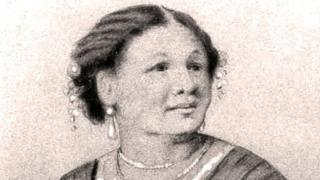
    Black and white sketch of Mary Seacole

    Image copyright
    Getty Images

    Image caption

    Jamaican-born nurse Mary Seacole cared for dying and wounded soldiers

    Black, Asian and minority ethnic figures (BAME) are set to feature on British notes and coins for the first time.

    Chancellor Rishi Sunak is considering proposals from a campaign group for legal tender to be more inclusive, according to the Sunday Telegraph.

    Mr Sunak has asked the Royal Mint to come up with new designs honouring BAME figures.

    Military nurse Mary Seacole and spy Noor Inayat Khan are being considered.

    The former Conservative parliamentary candidate Zehra Zaidi is leading the Banknotes of Colour campaign.

    She says no non-white person has ever been featured on British currency.

    “Who we have on our legal tender, our notes and our coins, builds into a narrative of who we think we are as a nation,” she told BBC News.

    “People from all backgrounds helped build Britain.”

    Image caption

    The former Conservative parliamentary candidate Zehra Zaidi is leading the Banknotes of Colour campaign

    BAME people who have served the nation – such as military figures and nurses – have been put forward for the proposed set of coins.

    Two years ago Ms Zaidi started a petition for the British World War Two secret agent Noor Inayat Khan, who was also a descendant of Indian royalty, to be featured on a coin, but the campaign fell on deaf ears.

    “She was the first female radio operator to be sent to enemy-occupied France,” said Ms Zaidi.

    “She was one of only four women in history to receive the George Cross.”

    The Jamaican-born nurse Mary Seacole is also being considered. She was born in the Caribbean to a Scottish father and a Jamaican mother.

    At the outbreak of the Crimean War she travelled to England hoping to join Florence Nightingale’s team of nurses.

    When she was turned down, she travelled to the Crimea herself and established the “British Hotel” – somewhere the soldiers could rest and enjoy a good meal.

    In May, a community hospital was named after the pioneering nurse.

    BAME figures such as Walter Tull, the British Army’s first black officer, have been featured on commemorative coins in the past.

    “But commemorative coins are not the same as legal tender because legal tender acts as a passport, an ambassador,” says Ms Zaidi.

    “We must tell the story of inclusive representation as it matters for cohesion and it matters in the narrative of who we are as a nation.”

  • Those fake baseball fans are creeping people out

    As part of an attempt to make Major League Baseball games in this weird, coronavirus-shortened season seem as close to normal as possible, Fox Sports decided to create virtual fans, digital versions of cheering people who would react to the games broadcast on Fox the way real fans do.

    Let’s just say they didn’t quite knock it out of the park.

    As Nick Schwartz noted in USA Today, the virtual fans popped in and out of view during the broadcasts, appearing when cameras pointed toward the outfield, but then weren’t visible behind home plate, making for an unsettling experience. Ryan Parker of The Hollywood Reporter agreed:

    To be sure, this is a new thing, and Brad Zager of Fox Sports told The Verge the network was still figuring it out, with plans to evolve the process from game to game and week to week. And the technology is certainly impressive, as my colleague Chaim Gartenberg described:

    The augmented reality software used to insert the crowds is called Pixotope, which has worked on AR graphics for things like the Super Bowl and The Weather Channel’s terrifying storm warning demonstrations.

    It works by leveraging graphics (created by creative agency Silver Spoon Animation) built in Epic’s Unreal Engine. Unreal Engine is used here for the same reason it’s popular for creating video games or for crafting virtual on-set backgrounds for shows like The Mandalorian. Unlike most film graphics, which have to be rendered in post-production after the fact, Unreal can render in real time, making it far more suited for live television.

    But fellow hockey fans may recall that back in the mid-1990s, Fox Sports was responsible for one of the most-hated pieces of in-game “technology,” the FoxTrax puck —AKA the “glow puck.” Used on Fox Sports hockey broadcasts from 1996 to 1998, the puck appeared to have a blue aura while moving on the ice, which turned into a red streak when a player shot the puck at the net (no, really). So forgive us if we’re a little wary.

    In any event, the initial reaction to the virtual MLB fans is that the tech needs a bit of work. Houston Chronicle sports editor Matt Young found they weren’t all that compelling: “Just a ton of dudes alternating resting their chin in their hand and then 2-second delayed reactions.”

    The NBA is going a slightly different route: It will invite fans — with special tickets— to attend games virtually and will show their heads on screens alongside the court. It’s using Microsoft Teams’ Together mode to create the effect.

    It’s still a bit weird, though. Emily Adams of FanSided says the result is “completely ridiculous” and will present an “absurd” experience for TV viewers. Los Angeles Times Lakers beat writer Tania Ganguli tweeted an image (and those fans sure are excited for what looks like a warmup session):

    Some MLB teams are giving fans the chance to “attend” games this season by purchasing a cardboard cutout of themselves to be placed in the stands. And OK, even though he’s apparently a Mets fan, this dog is pretty cute:

    However, even the cardboard cutouts can become a little unnerving, especially when one almost gets decapitated by a home run ball:

    I’ve been trying to find the appropriate Yogi Berra non-sequitur to lend some insight into this very weird situation. “If the people don’t want to come out to the ballpark, nobody’s going to stop them” doesn’t quite work, but it’s close. And if we’re going to go forward with sporting events during a pandemic, nothing’s going to make total sense because it’s an unprecedented situation. It will be interesting to see whether having pseudo-fans in attendance makes watching games more enjoyable, or if it will just become a weird novelty everyone gets used to over time.

  • Spain travel rules: What are my rights?

    People sunbathe in Arenal beach on June 16, 2020 in Palma de Mallorca (June 2020)

    Image copyright
    Getty Images

    Image caption

    Unsure about your travel plans? Best consult your airline, tour operator or travel agent

    The government’s decision to impose a 14-day quarantine on travellers arriving in the UK from Spain has caused a great deal of “uncertainty and confusion”, as one holiday firm has put it.

    Here are some of the issues it raises and what you can do about them.

    Why is the Foreign Office advice different from that of the Department for Transport?

    Essentially, they serve different purposes. The Foreign Office applies to the whole of the UK and tells people which countries “no longer pose an unacceptably high risk for British travellers”.

    In other words, the FCO is assessing whether coronavirus poses a threat to UK travellers’ well-being, as part of its wider remit to warn people of dangerous areas and trouble-spots around the world.

    However, the Department for Transport advice applies only to England. It is designed to offer a list of countries from which travellers may be able to return without self-isolation.

    The devolved administrations in Scotland, Wales and Northern Ireland have their own views and are entitled to offer different guidance. In this case, they have also decided to take Spain off the list of countries exempt from quarantine.

    Is my insurance valid if I’m already there?

    The Association of British Insurers has advised holidaymakers that if they were already in Spain when the government’s advice changed, their insurance was likely to cover them until they returned home.

    But it added: “Travelling to countries against FCO advice is likely to invalidate your travel insurance and this would apply to those yet to travel to mainland Spain.

    “Customers looking to change or cancel their travel plans should speak with the airline provider, tour operator or travel agent in the first instance.

    “If you booked your trip or took out your travel insurance after Covid-19 was declared a pandemic, you may not be covered for travel disruption or cancellation. In either circumstance, we’d advise checking with your insurer.”

    What about if I’m not there but plan to go? Can I get a refund?

    Again, the best thing to do is consult your airline, tour operator or travel agent. The issue is complicated because it depends on when and where you are booked to go. Besides, the government’s advice could change again with very little notice.

    Tui, for one, has said that customers due to travel to all areas of Spain between 27 July and 9 August will be able to cancel or amend holidays and will be able to receive a full refund or the option to rebook their holiday with a booking incentive.

    However, it adds that people with holidays from 10 August will be updated on 31 July.

    Jet2 says it is advising customers to arrive for their flights as normal as it is continuing to operate its scheduled programme to and from mainland Spain, the Balearic Islands and the Canary Islands.

    “Because the FCO travel advice to these destinations remains unchanged, our usual terms and conditions apply. As always, we advise customers to purchase appropriate travel insurance before travelling,” Jet2 says.

    “This is a fast-moving situation, which we will continue to monitor very closely.”

    British Airways and easyJet have also said they are maintaining their flight schedules. But airlines have expressed frustration with the government’s approach, complaining of the “uncertainty and confusion” that has resulted.

    People whose trips are cancelled should get a refund within two weeks, but with the travel industry under so much pressure, that deadline may well be missed.

    What are the quarantine rules for when I return?

    When you arrive back in the UK, you must go straight home or to other suitable accommodation. You are allowed to travel by public transport.

    Your 14-day period of self-isolation starts from the day after you arrive.

    You cannot leave home except for medical assistance, to attend court or go to a funeral – or to go shopping for essentials, if no-one else can do this for you.

    Leaving home for work, exercise or socialising is not allowed.

    What are my rights with my employer if I have to self-isolate?

    Employees or workers are not automatically entitled to statutory sick pay if they are self-isolating after returning from holiday or business travel and they cannot work from home.

    That only applies if they have the virus or symptoms of it, or if there are other medical reasons.

    But to a certain extent, it is at your employer’s discretion.

    The industrial relations body Acas advises employees to check their workplace’s policy to see whether their employer pays statutory sick pay or a higher rate of sick pay if anyone needs to self-isolate after returning to the UK.

  • Amazon won’t stream any New York Yankees games this season after all

    With Major League Baseball’s season shortened to just 60 games this year, Amazon won’t be broadcasting any New York Yankees games this season, Bloomberg reported.

    Amazon was slated to stream 21 Yankees games beginning April 17th with several high-profile games —including three against the Boston Red Sox— on the list. Amazon Prime members in New York state, northeast Pennsylvania, Connecticut, and central New Jersey would have been able to stream all 21 games.

    But the Yankees’ YES Network has opted to keep those games for its channel, and MLB rules limit streaming games that are shown on regional sports networks like YES.

    “Given the unique circumstances surrounding this season, YES Network will televise all New York Yankees games not airing on the national networks,” Amazon said in a statement to Bloomberg. “We’ll evaluate our plans at the conclusion of this season.”

    Amazon became part-owner in YES last August after Disney sold its 80 percent stake. The deal was split among several parties, including the Yankees, Sinclair Broadcast Group, Amazon, and RedBird Capital.

    The Yankees games would have added to Amazon’s sports streaming mix; it already streams Thursday Night Football, and has struck deals to show Premier League matches in the UK and UEFA Champions League tournament matches in Germany.

    The Yankees beat the Washington Nationals 4-1 on Thursday in the MLB season opener, in a game that ESPN said drew 4 million viewers.

  • Coronavirus lockdown vs fear: What’s delaying economic recovery?

    a visitor to Disneyland Japan has her temperature checked

    Image copyright
    Getty Images

    The coronavirus outbreak has been followed by a massive decline in economic activity in many countries, often blamed on the lockdowns aimed at stopping the spread of the disease and limiting the deaths it causes.

    In fact, there are two forces at play.

    Government rules being one, and voluntary action taken by individuals and businesses is the other.

    If you want to know how quick the recovery will be, you need to know the extent of each.

    To the extent that it’s driven by official restrictions, lifting them would do the trick.

    But it will take more than that to reverse personal choices and habits.

    Consumer bounce-back?

    That would need real progress to be made in reducing the risk of infection. Consumers, workers and employers would also have to be confident in that progress.

    There is ample survey evidence of a reluctance to go back quickly to the pre-pandemic way of life.

    IPSOS-Mori found a majority of Britons said they were still uncomfortable about a wide range of activities, including going to a bar or restaurant, large public gatherings, using public toilets or public transport.

    This may be one reason why some venues that could reopen are choosing not to – although the restrictions they would have to operate under make it harder to earn a profit even if the customers were to return.

    Image copyright
    Getty Images

    Image caption

    A recent survey found a majority of Britons were still uncomfortable about activities including using public transport

    A substantial amount of what consumers spend is what is called social consumption, where buyers are physically close to each other – eating out, live entertainment and travel, for example.

    When the virus is circulating those activities expose people to the risk of infection.

    The Oxford economist Simon Wren-Lewis, who looked at the possible impact of a pandemic more than a decade ago, says the sectors concerned covered more than a third of consumer spending.

    There is ample anecdotal reporting that as restrictions have eased this social consumption has resumed to a significant degree.

    Declining cases

    But is it just because the measures have been eased?

    The reason they have been eased in many countries is because cases, hospital admissions and deaths have declined.

    Some people – though not all – will have concluded that it is relatively safe to go out. So that might be the reason that economic activity is picking up.

    Some economists have tried to disentangle the two elements.

    There are some strikingly different conclusions about the balance between the two.

    Image copyright
    Getty Images

    Image caption

    Did consumer spending bounce back, or has lockdown merely eased?

    Research done at the investment bank Goldman Sachs looked at the relationship between stricter lockdown measures and the impact on economic activity.

    Tougher lockdown measures did correlate with evidence pointing to sharper economic declines, although that research did not separate the contribution from fear of infection.

    In the US one group from the Universities of Texas, California and Chicago concluded that it was mostly the lockdown.

    Infection rate

    They used data from a series of household surveys. They found that spending by the average American household fell by $1,000 between January and April.

    They came to the view that lockdowns accounted for 60% of the decline in employment and that households under lockdown were spending on average 31% less than others.

    They concluded “the declines in employment and spending can be largely attributed to lockdowns rather than to the share of the population infected by the coronavirus.”

    But others, looking at different evidence, have come to different conclusions.

    Two economists at Chicago University looked at mobile phone data on customer visits to more than two million businesses.

    The fact that different state and county authorities imposed different restrictions gave them a way of estimating how much of the downturn was due to those rules.

    Denmark and Sweden

    They found overall a decline in consumer traffic to these businesses of 60%.

    But their analysis suggested that a little more than a ninth of that was due to legal restrictions.

    They also found that the extent of the declines was linked to the number of coronavirus deaths in the area.

    Their overall conclusion: “Individual choices were far more important and seem tied to fears of infection”.

    Image copyright
    Getty Images

    Image caption

    Some analysis suggests fear of infection drove the drop in buying

    Others at Copenhagen University used data on bank transactions to compare Denmark and Sweden, which they say were similarly exposed to the pandemic, with only the former imposing significant restrictions.

    They estimated that total spending fell by 25% in Sweden and by 29% in Denmark.

    They write: “This implies that most of the economic contraction is caused by the virus itself and occurs regardless of whether governments mandate social distancing or not.”

    Global Trade

    More from the BBC’s series taking an international perspective on trade:

    All that said, Sweden was one of the few developed countries to manage some economic growth in the first quarter of 2020, albeit just 0.1%.

    Denmark’s economy shrank by 2.1% in that period.

    In spite of the differences these studies all point to a contribution from both rules and choices that is substantial.

    Image copyright
    Getty Images

    Image caption

    Denmark saw only a slightly steeper drop in economic activity compared to Sweden

    To take the Sweden-Demark study – the four percentage-point additional fall in spending attributed to the lockdown in Denmark even on its own would be seen as a substantial downturn.

    Perhaps we will get a clearer picture as more data emerges with, probably, different patterns of recovery.

    So far it seems clear that both factors, fear and lockdown, have contributed to the undoubted economic damage.

  • Tesla CEO Elon Musk says his Twitter DMs are mostly for swapping memes

    In a free-wheeling interview with New York Times columnist Maureen Dowd, Tesla CEO Elon Musk said his Twitter direct messages are mostly made up of memes, and he isn’t overly worried about them being hacked.

    Musk’s was one of more than 100 high-profile Twitter accounts compromised as part of a July 15th Bitcoin scam. The company has said the attackers may have downloaded the private direct messages and personal information of some people in the process, although Twitter said none of those were “verified” accounts, as Musk’s is.

    “I’m not that concerned about my DMs being made public,” Musk told Dowd. “I mean, we can probably cherry pick some section of my DMs that sound bad out of context but overall my DMs mostly consist of swapping memes.”

    During the conversation with Dowd, Musk said he has a “secret” Instagram account “to see links of things that people send me” (paging Ashley Feinberg) and that he thinks he may have had COVID-19 in January.

    “I think the reality of Covid is that it is dangerous if you’re elderly and have pre-existing conditions,” he said in the interview. “It absolutely makes sense to have a lockdown if you’re vulnerable, but I do not think it makes sense to have a lockdown if you’re not vulnerable.” Musk went toe-to-toe with officials in Fremont, California, reopening his company’s car factory there in May in violation of a local shelter-in-place order. He told Dowd he wears a mask on the factory floor.

    One of the more puzzling aspects of the interview is how Dowd paints Musk’s personal relationships: “Certainly, the titan can be a romantic.” She lists several of his more high-profile relationships, including his current girlfriend Grimes, and actresses Talulah Riley and Amber Heard, but makes no mention of Musk’s first wife Justine —mother of five of his sons— whom he divorced in 2008.

    Musk doesn’t grant many interviews, so it’s interesting to see him answer questions about SpaceX, Tesla, Facebook, AI, Twitter, and that copy cat tweet he sent to Amazon and Blue Origin CEO Jeff Bezos. And in case you were wondering: He’s OK with President Trump calling him “one of our great geniuses” following the May launch of SpaceX’s Crew Dragon.

    “I’ll take the compliment,” Musk said.

    We’re as shocked as you are.