Online retailer Boohoo has been criticised by MPs who say it has failed to address claims of exploitation at factories in Leicester.
Philip Dunne MP said he found it “incredible” Boohoo was surprised by allegations of poor working conditions.
Boohoo had said it was “shocked and appalled” by reports that workers had been paid as little as £3.50 per hour.
But Mr Dunne suggested the firm was already aware of the issues. Boohoo said it would respond “in due course”.
The firm’s co-founder, and then-chief executive, Carol Kane appeared in front of the Environmental Audit Committee (EAC) of MPs in 2018 over links Boohoo “may have to illegally low pay in Leicester garment factories”.
“It is incredible that over a year since the committee highlighted illegal working practices in its supply chain, Boohoo has publicly denied any knowledge of what has been happening for years,” Mr Dunne, who is chair of the EAC, wrote in a letter to the company.
“It is shameful that it took a pandemic and the ensuing outrage about working practices in their supply chain for Boohoo finally to be taken to task for turning a blind eye,” he said.
‘Turning a blind eye’
Last week, Boohoo – which also owns the Pretty Little Thing brand – faced a backlash after a Sunday Times report claimed workers at a Leicester factory that supplied clothes to Boohoo were paid just £3.50 an hour, while being offered no protection from coronavirus.
The national minimum wage for people over 25 years-old is £8.72 an hour.
Image copyright Prettylittlething
Image caption
Boohoo also owns PrettyLittleThing, which has collaborated with celebrities like Little Mix
The fashion firm ordered an independent review of its UK supply chain as a result, which will by led by Alison Levitt QC, a barrister specialising in business crime and financial services.
The committee also asked what measures the online retailer had taken to protect the workers that make its clothes during the pandemic, and whether it would allow the establishment of formal trade unions.
The letter cited claims by Usdaw that workers had been told “not to speak with trade union representatives”.
Boohoo action on exploitation claims ‘inadequate’
Boohoo dropped by Next, Asos and Zalando over exploitation claims
Other fashion stores have distanced themselves from Boohoo over the recent reports.
Next, Asos and Zalando all announced that they had stopped selling Boohoo clothes on their websites in July.
The retailers said they were pausing relationships with Boohoo’s brands, pending the outcome of the company’s investigation.
Boohoo’s share price has plunged over the past month. It currently stands at 210p, after hovering around the 410p mark for most of June.
Games publisher Ubisoft has revealed plans for its biggest titles for the coming year, including the casting of Breaking Bad and The Mandalorian’s Giancarlo Esposito as the bad guy in its next Far Cry game.
Speaking to BBC Click’s Marc Cieslak, Esposito says he brings a quiet menace to the character’s role and there is a powerful storyline about a father and his son.
Ubisoft also revealed gameplay for Assassin’s Creed Valhalla and Watch Dogs: Legion.
But all this comes at a time of crisis for the company, with allegations of abuse and sexual misconduct in its development studios.
The way the UK reports unemployment may not reflect the “true scale of joblessness”, says a think tank.
Unemployment rose by 34,000 in April to reach 1.3 million, according to the Office for National Statistics (ONS).
But the Resolution Foundation argues that the 23% drop in average hours worked between early March and late April is a better indicator of unemployment.
The ONS said it publishes a large selection of analysis on employment.
Official numbers on how many people are out of work and claiming unemployment benefits will be published on Thursday.
Resolution Foundation chief economist Mike Brewer said: “Britain is in the midst of an unprecedented economic shock that is profoundly affecting millions of people’s jobs.
“Unemployment is forecast to hit 4 million for the first time ever. And yet our official data is failing to show the true extent of this jobs crisis.”
On Tuesday, the government’s budgetary watchdog, the Office for Budgetary Responsibility (OBR), projected that unemployment could reach 4 million people, if the UK’s economic recovery is poor, up from 1.3 million in 2019 in its latest analysis.
Meanwhile, data for people claiming benefits soared to 2.3 million for April.
But these figures could include some people who are eligible to claim support while still employed. The ONS said: “Enhancements to Universal Credit, as part of the UK government’s response to the coronavirus, mean that an increasing number of people became eligible for unemployment-related benefit support, although still employed.”
The Resolution Foundation says this data is not a good reflection of the true picture either because it includes furloughed workers who initially made a claim when the crisis first struck.
The think tank says it estimates that “fewer than half (700,000) of the 1.6 million increase in the claimant count between March and May is related to people who are newly out-of-work, and not receiving furlough pay or self-employed grants from the government”.
It urges the ONS to make more of its ability to count the number of workers who are employed and not temporarily without work, alongside the headline employment rate, as this would provide “a far more accurate picture of labour market activity”.
The ONS said it agreed that data on hours worked was an important component in understanding the unemployment picture in the UK.
“However, our detailed Labour Force Survey estimates are based on interviews with tens of thousands of people and provide vital detail not available from any other source,” it said in a statement.
“It is difficult to interpret claimant count figures, as we know these include some people in work.”
Separately, the British Chambers of Commerce is warning that almost a third of UK businesses (28%) they surveyed expect to cut jobs in the next three months.
The figure compares to last year, when only 7% expected to do so.
Some 7,400 firms took part in the BCC survey, which found more than a quarter of the firms (28%) said they had already shrunk their workforces since the pandemic began.
UK households and businesses produce 1.45 million tonnes of electrical waste each year, research shows.
The e-waste research organisation Material Focus calculates that at least 500,000 tonnes of the waste were thrown away, stolen or hoarded.
Its latest study suggests un-recycled household electricals cost the UK over £370m a year in lost materials like gold, copper, aluminium and steel.
This is important because mining the metals leads to pollution.
It also harms wildlife and fuels climate change.
Material Focus has a postcode locator for people to find their nearest e-waste recycling point for items such as toasters and old cables.
Can we fix our way out of the e-waste problem?
What about my photos?
The report says many people hang on to old laptops and phones because they hold photos or sensitive data.
It suggests one answer is to ask mobile phone shops to transfer data and return old phones to factory settings in front of you.
Reputable repair shops could also wipe data for you – at a price. Some charity shops will also take e-waste such as phones.
There will be another option from January, when a new rule means you’ll be able to hand back to any major shop an aged kettle, say, or toaster when you buy a new one. Some stores offer this already.
The increase in electrical waste has been relentless as the population has grown and new consumer electronics reach the market.
Many of the new purchases are not replacements for existing kit, but innovative consumer goods that weren’t available previously, such as smart speakers.
Waste figures ‘enormous’
The academic lead for the study was Alison Stowell at Lancaster University. She told BBC News: “These figures on electrical waste are quite enormous.
“When we consume things, we don’t tend to think about how much material is in them or how valuable they could be if they are put back into the production and supply chain through recycling.”
The report says 1.65 million tonnes of electricals were sold in the UK in 2017, with 155,000 tonnes dumped in domestic bins and subsequently incinerated or sent to landfill.
Mark Hilton from the consultancy Eunomia told BBC News: “The UK is still failing to meet its target of collecting 65% of electricals.
“It’s often too hard for people to get to a recycling centre, many of which are only accessible by car. We’d like to see small waste electricals collected alongside other recyclables from the doorstep.”
Take-back vouchers urged
He also wants incentives offered such as cash-back or store vouchers for unwanted electrical goods – which could help encourage people back to the high-street.
And he says it’s critical for ministers to oblige online platforms, like Amazon, to take far greater end-of-life responsibility for items their sellers put on the market, through perhaps secure deliveries.
That issue is now being discussed by the government. A spokesperson for the Department for Environment, Food and Rural Affairs (Defra) said: “We are committed to moving to a more circular economy.
“We will be reviewing the regulations on electrical items to help drive up recycling, encourage better eco-design and ensure manufacturers and retailers take responsibility for waste electricals.”
China’s economy grew 3.2% in the second quarter following a record slump.
The world’s second biggest economy saw a sharp decline in the first three months of the year during coronavirus lockdowns.
But figures released on Wednesday show China’s Gross Domestic Product (GDP) returned to growth during April to June.
The numbers are being closely watched around the world as China restarts its economy.
The figure is higher than experts were predicting and points towards a V-shaped recovery – that is, a sharp fall followed by a quick recovery.
It also means China avoids going into a technical recession – signified as two consecutive periods of negative growth.
The bounce-back follows a steep 6.8% slump in the first quarter of the year, which was the biggest contraction since quarterly GDP records began.
The country’s factories and businesses were shutdown for most of this period as China introduced strict measures to curb the spread of the virus
The government has been rolling out a raft of measures to help boost the economy, including tax breaks.
Is this a V-shaped recovery?
Analysis by Mariko Oi, BBC News, Singapore
The Chinese economy managed to grow stronger than expected as the economy emerged from the lockdown.
All the stimulus measures announced by the authorities seem to be working – with factories getting busier, evident in growth in the industrial production data.
But one sector that hasn’t recovered as quickly as they had hoped is retail sales.
They still fell in the second quarter – and getting people spending again will remain a challenge.
And just as the economy starts to recover, tensions with the US are flaring up – especially over Hong Kong.
That is why some economists are reluctant to call it a V-shaped recovery just yet.
A research note from Deutsche Bank said the “V-shaped recovery” was “largely completed”.
“Consumer spending is still below its pre-Covid path, but the remaining gap is largely concentrated in a few sectors – travel, dining, leisure services– where rapid recovery is unlikely,” it added.
In May, China announced it would not set an economic growth goal for 2020 as it dealt with the fallout from the coronavirus pandemic.
It is the first time Beijing has not had a gross domestic product (GDP) target since 1990 when records began.
For the first six months of the year, China’s economy fell 1.6%, its National Bureau of Statistics said.
Billionaires Elon Musk, Jeff Bezos and Bill Gates are among many prominent US figures targeted by hackers on Twitter in an apparent Bitcoin scam.
The official accounts of Barack Obama, Joe Biden and Kanye West also requested donations in the cryptocurrency.
“Everyone is asking me to give back, and now is the time,” a tweet from Mr Gates’ account said. “You send $1,000, I send you back $2,000.”
The tweets were deleted just minutes after they were first posted.
Image copyright Twitter
Image caption
A hacked tweet from Apple’s account
Twitter took the extraordinary step of stopping many verified accounts marked with blue ticks from tweeting altogether.
There were reports that password reset requests were also being denied.
Dmitri Alperovitch, who co-founded cyber-security company CrowdStrike, told Reuters news agency: “This appears to be the worst hack of a major social media platform yet.”
Twitter said it was looking into the incident and would issue a statement soon.
Skip Twitter post by @TwitterSupport
We are aware of a security incident impacting accounts on Twitter. We are investigating and taking steps to fix it. We will update everyone shortly.
— Twitter Support (@TwitterSupport) July 15, 2020
End of Twitter post by @TwitterSupport
On the official account of Mr Musk, the Tesla and SpaceX chief appeared to offer to double any Bitcoin payment sent to the address of his digital wallet “for the next 30 minutes”.
“I’m feeling generous because of Covid-19,” the tweet added, along with a Bitcoin link address.
Image copyright Twitter
Image caption
One of the hacked tweets from Elon Musk’s account
One such tweet from Musk’s account was deleted, only for another one to appear, then a third.
What is Bitcoin?
How do crypto-currencies work?
As well as rapper Kanye West, his wife, reality TV star Kim Kardashian, former US President Obama, Mr Biden, who is the current Democratic presidential candidate, and media billionaire Mike Bloomberg, major companies Uber and Apple were targeted.
The Biden campaign said Twitter had “locked down the account within a few minutes of the breach and removed the related tweet”.
A spokesman for Bill Gates told AP news agency: “This appears to be part of a larger issue that Twitter is facing.”
An unprecedented ‘smash and grab’
By Joe Tidy, Cyber-security reporter
These “double your Bitcoin” scams have been a persistent pest on Twitter for years but this is unprecedented with the actual accounts of public figures hijacked and on a large scale.
The fact that so many different users have been compromised at the same time implies that this is a problem with Twitter’s platform itself.
Early suggestions are that someone has managed to get hold of some sort of administration privileges and bypassed the passwords of pretty much any account they want.
With so much power at their fingertips the attackers could have done a lot more damage with more sophisticated tweets that could have harmed an individual or organisation’s reputation.
But the motive seems to be clear – make as much money as quickly as they can. The hackers would have known that the tweets wouldn’t stay up for long so this was the equivalent of a “smash and grab” operation.
There are conflicting accounts of how much money the hackers have made and even when a figure is settled upon, it’s important to remember that cyber-criminals are known to add their own funds into their Bitcoin wallets to make the scam seem more legitimate.
Either way, it’s going to be very hard to catch the criminals by following the money. Law enforcement, as well as many angry users, will have some strong questions for Twitter about how this could have happened.
Cameron Winklevoss, who was declared the world’s first Bitcoin billionaire in 2017 along with his twin brother Tyler, tweeted a message on Wednesday warning people not to participate in the “scam”.
In the short time it was online, the link displayed in the tweets of targeted accounts received hundreds of contributions totalling more than $100,000 (£80,000), according to publicly available blockchain records.
The Twitter accounts targeted all have millions of followers.
A £4bn cut in VAT has come into force, allowing firms in the food, drink and hospitality sectors to slash prices.
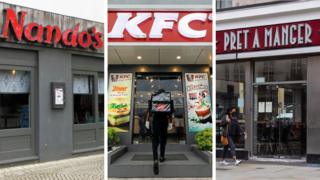
Nando’s, Pret A Manger and McDonald’s are among firms to promise reductions after the chancellor ordered a temporary VAT cut from 20% to 5%.
The Treasury estimates households could save £160 a year on average, but not all firms will pass on the benefit.
Many companies are expected to use the windfall to shore up finances hit by the lockdown rather than cut prices.
The VAT reduction will stay until 12 January next year, Chancellor Rishi Sunak announced last week. It was part of a package of measures to help firms recover and get consumers spending.
VAT – Value Added Tax – is paid on everyday goods and services, but the tax is usually included in the price most consumers see.
Visitors may not see the thrill of VAT cut
Summer Statement: Key points at a glance
Nando’s said it would pass on “100% of the benefits” from the tax cut to its customers, helping to reduce the price of a quarter chicken by 55p.
Pret A Manger said the price of its coffee would be cut from Wednesday following the VAT change, with the price of hot food to be cut from Friday.
The High Street chain said the price of a takeaway latte would fall 35p to £2.40, thanks to the tax break.
Pret is one of a number of chains to announce hundreds of job cuts after the coronavirus crisis hit its operations.
Fast food chain KFC said it would reduce the price of sharing buckets by £1 and slash the cost of certain “fan favourites” by 50p.
McDonald’s also said it had recommended that its franchisees cut prices on an array of products, including popular lines such as the Big Mac and Quarter Pounder. There will also be price cuts on coffee.
In the UK, the vast majority of the 1,350 McDonald’s outlets are owned and operated by individual business men and women, with each franchisee running an average of six restaurants each.
But Paul Pomroy, McDonald’s chief executive for UK and Ireland, said that only four outlets across the UK were currently open for dine-in customers, with the remainder offering takeaway service.
Mr Pomroy said he hoped the price cuts being introduced were a sensible balance between boosting consumer demand and supporting franchisees in getting staff back to work.
On Tuesday, Starbucks said it had made the decision to pass on the full 15% discount on coffee served in company-operated stores. Other shops and venues with Starbucks licences will be left to pass on whatever reductions suit their business.
What is VAT?
Value Added Tax, or VAT, is the tax you have to pay when you buy goods or services.
The standard rate of VAT in the UK is 20%, with about half the items households spend money on subject to this rate.
There is a reduced rate of 5% which applies to some things such as children’s car seats and home energy.
When you see a price for something in a shop, any VAT will already have been added.
There are also various items for which you do not have to pay any VAT, such as most supermarket food, children’s clothing, newspapers and magazines.
Read more about VAT
It is clear that many businesses will not be passing on the reduction. Malcolm Bell, chief executive of Visit Britain, said the chancellor’s move was to support business, not help holidaymakers.
He said some firms had reported tourists calling them to ask for 15% off their holiday booking. “My message to customers is this is to help the businesses, not to reduce the cost of their holiday. It is only a temporary relaxation up to January.”
Many attractions such as museums, parks and zoos, might also not pass on the reduction.
Bernard Donoghue, director of the Association of Leading Visitor Attractions (Alva), said he expected the VAT cut would go towards helping venues “repair their finances as opposed to being passed on to customers”.
Alva members were seeing a spike in demand after three months of lockdown, with attractions that offer pre-booked visits “vastly oversubscribed”, he said.
Pub chain Wetherspoon said it would reduce prices on meals, coffee and soft drinks.
It said it would use the tax break to help fund lower prices on some of its most popular beers.
However, this move drew criticism from Tom Stainer, chief executive of the Campaign for Real Ale (Camra), and James Calder, chief executive of the Society for Independent Brewers (Siba).
“Like all pubs, Wetherspoon will not be able to benefit from a VAT reduction on beer sales and it is disappointing to see them potentially mislead customers into believing cheaper beer prices are as a direct result of the chancellor’s measures,” he said.
Wetherspoon has produced promotional posters to advertise food price cuts, including one called Sunak’s Specials and another called Dishi Rishi.
Its chairman, Tim Martin, has campaigned for tax equality between pubs, restaurants and supermarkets for many years. He said: “Supermarkets pay no VAT on food sales and pubs pay 20%. Supermarkets pay about 2p per pint of business rates and pubs pay about 20p.
“A VAT reduction will help pubs and restaurants reverse this trend – creating more jobs, helping high streets and eventually generating more tax income for the government.”
But he said that not every hospitality business would be able to reduce prices immediately.
“Some will need to retain the benefit of lower VAT just to stay in business. Others may need to invest in upgrading their premises.
“However, lower VAT and tax equality will eventually lead to lower prices, more employment, busier High Streets and more taxes for the government.”
Image caption
Advertising for Tesla’s Model 3 (left) did not go over well in Germany
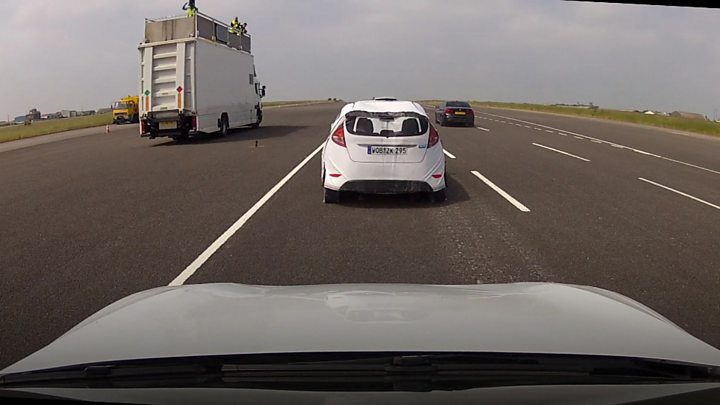
Tesla’s claims about its Autopilot driver-assist feature are misleading, a German court has ruled.
The use of the word “autopilot”, along with other marketing material, suggested the vehicle could drive on its own, the court said.
But the technology still requires the driver to remain alert at all times.
Tesla has been banned from repeating the misleading claims. German law does not allow fully autonomous driving.
Germany’s Wettbewerbszentrale fair-competition group had objected to Tesla’s website promising, in July 2019, “full potential for autonomous driving” including automatic driving on motorways.
Under the heading “by the end of the year”, Tesla added its cars would be able to recognise traffic lights and automatically stop and start driving in urban areas.
Media playback is unsupported on your device
Media captionThis car is on Autopilot. What happens next?
The court, in Munich, said: “By using the term ‘autopilot’ and other wording, the defendant suggests that their vehicles are technically able to drive completely autonomously.”
In 2018, two US consumer groups also complained about the “deceptive and misleading” naming of the Autopilot feature.
Tesla’s strong position in the electric-vehicle market has made it a challenger to German carmakers.
And it has chosen Berlin as the site of its first major European factory.
‘Typically bold’
Responding to a tweet pointing out pilots do not stop working when a plane’s autopilot mode is on, chief executive Elon Musk tweeted: “Tesla Autopilot was literally named after the term used in aviation.
“Also, what about ‘autobahn’?” he added, referencing the German word for motorway.
“Auto” is a German word for car, similar to the English word “automobile”.
Last week, Mr Musk said completely autonomous driving was “very close” and Tesla would crack the technology by the end of this year – a claim one analyst called “typically bold”.
Police car
There have been several examples of drivers misusing the Autopilot system in dangerous circumstances.
A British driver was disqualified from driving for 18 months after turning the system on and climbing into the passenger seat, on the motorway.
Earlier this year, investigators said another Tesla driver, who died in a crash, in March 2018, had been playing a video game when his Autopilot-enabled car had hit a concrete barrier.
They also warned more crashes could happen if Tesla did not change the system.
And in another case, an Autopilot-mode Tesla crashed into a stationary police car.
Seventeen-year-old women are most likely to have been put on furlough during the coronavirus crisis, official data shows.
Some 61% of jobs done by these young women had wages paid by the state, HM Revenue and Customs (HMRC) said.
Young men of the same age were also more likely than not to have been furloughed, hitting 58% of their jobs.
Men aged in their 40s and women aged 41 to 58 were least likely to have been put on the scheme.
Anne Willmot, age campaign director at Business in the Community, said: “Young people are being locked out of employment at the start of their careers – a key time for them to gain experience, learning and development in the workplace.”
More than nine million workers who are unable to do their job because of the coronavirus outbreak have had their wages paid by the government.
What happens when the furlough scheme ends?
The furlough scheme was designed to help people put on leave because of the outbreak, and prevent mass redundancies. Firms start paying towards the scheme from August. It will close in October.
Detailed data has been published by HMRC which shows where the scheme was used until the end of June, by which point it had cost the Treasury £26.5bn.
People working for smaller companies are more likely to have been furloughed than those employed by bigger businesses.
Some 57% of jobs at businesses with between five and nine employees had been furloughed, compared with 19% at companies with 250 or more employees.
A handful of larger companies have been repaying furlough money claimed from the Treasury.
By sector, those working in accommodation and food services had the highest proportion of employers furloughing at least some staff (87%) and the highest proportion of total employments furloughed at 73%.
The local authority with the highest proportion of jobs furloughed was South Lakeland at 40% and the lowest was Boston in Lincolnshire at 20%.
Support for the self-employed
Three-quarters of those eligible for support grants to help the self-employed through the coronavirus crisis had made a claim by the end of June, further data from HMRC shows.
What help are self-employed getting from government?
Women were less likely to have made a claim, with 70% having done so, compared to 78% of men who were eligible and had claimed a grant.
The amount paid depends on previous income from their trade, and the figures show that the average claim for women was also lower, at £2,300, compared to the average claim for men of £3,200.
The highest proportion of claims by profession was in the construction sector.
Have you been affected by the issues raised in this story? Share your experiences by emailing .
Please include a contact number if you are willing to speak to a BBC journalist.
WhatsApp: +44 7756 165803
Tweet: @BBC_HaveYourSay
Please read our terms & conditions and privacy policy