Blog

  • John McAfee Emerges With Private Cell Phone Data Service | Privacy

    The debate over online privacy and end-to-end encryption that has been raging for years since whistleblower Edward Snowden leaked information about the United States National Security Agency’s covert surveillance of Americans’ communications to the press in 2013 continues.

    Privacy organizations such as the Electronic Frontier Foundation are up in arms over two bills before the U.S. Senate claiming to fight online child sexual exploitation. They argue that the bills violate the Constitution and weaken both national security and online security for individuals.

    One, the EARN IT Act of 2020, would let the government compel online service providers to break encryption online.
    The other, the Lawful Access to Encrypted Data Act, would let the Department of Justice demand manufacturers of encrypted hardware and software, communications providers, and others create backdoors in their products or services.

    Meanwhile, organizations fighting child sexual exploitation argue that encryption facilitates predators’ activities; a growing problem, with 18.4 million reports were made last year to the U.S. National Center for Missing & Exploited Children.

    At Facebook’s annual general meeting on May 27, nearly 13 percent of shares voted were in favor of asking the company to assess the risk of increased sexual exploitation of children as it develops and offers additional privacy tools such as end-to-end encryption.

    Law enforcement contends that encryption facilitates criminals and terrorists.

    Into this mix comes colorful cybersecurity expert, and fugitive from the U.S. Internal Revenue Service, John McAfee, who founded, then sold, the cybersecurity company bearing his name.

    On July 7, McAfee announced the launch of the 4G Ghost Cell Phone Data Service, which he described as the world’s first private cell phone data service.

    Users will be untraceable and untrackable, according to McAfee. The service is slated to launch globally in December.

    Promise of Privacy

    The Ghost Cell Phone Data Service is part of a larger ecosystem which includes McAfee’s Ghost cryptocurrency and GhostX Exchange for private cryptocurrency exchange.

    “The Ghost brand will encompass a range of practical, real world tools for people to protect our rights and take back our privacy,” McAfee said. “Privacy is a human right.”

    McAfee invited members of the media to beta test the service. They should contact mcafeeghostphone [at] gmail.com if they wish to do so.

    “It’s likely that the Ghost Cell Phone Data Service provides a suite of anonymity services, but it’s one thing to say you make certain things more anonymous and another to guarantee complete anonymity no matter what you do,” Roger Grimes, data driven defense evangelist at KnowBe4 told TechNewsWorld.

    “Anyone promising the latter should be suspect.”

    It is possible to track users “myriad of different ways that have nothing to do with your physical connection,” Grimes noted, and “if this service is really, really good at perfect anonymity and becomes known to law enforcement you can expect that it will be outlawed. Most of our world’s governments don’t tolerate perfect anonymity that really works.”

    How Ghost by McAfee Works

    The service, which is data-only, uses eSIM so phones can connect to its network without needing a SIM card, which is traceable.

    It provides coverage in 35 countries.

    Users can manually select from more than 2,000 IP addresses in these countries to access service, making it difficult to pinpoint their location. They can change IP addresses as frequently as desired.

    All network traffic will pass through multiple anonymized servers and cannot be traced accurately back to the customer.

    The service is designed to obscure the user’s location, and “a trace on your phone will show you are where you aren’t,” Rob Enderle, principal at The Enderle Group, told TechNewsWorld.

    Ghost is providing a free app for the service for both iOS and Android.

    The service supports the Google Pixel 3, 3XL, and 4 XI; the Samsung Galaxy S20, S20+, Fold, and Galaxy Z Flip; the iPhone 11 family, as well as the iPhone XS, XS Max and XR. Other phones that support eSIM technology may work on the network also.

    The basic service package will offer access to Ghost’s networks and 1 GB of data transfer. Additional data can be purchased as an add-on.

    To use the data network, all that owners of a supported phone need to do is scan a QR code supplied when they purchase service. No personal information is required for sign-up and all service is prepaid with no contract, according to Ghost by McAfee.

    VoIP Weakness

    Voice services are not included, but the data plan fully supports VoIP services like Skype.

    That’s a potential crack in Ghost’s armor.

    VoIP services “keep call records, and Skype in particular has shared such data with the NSA in the past,” Paul Bischoff, privacy advocate with Comparitech, told TechNewsWorld.

    “Even if your data connection is private, you can still be tracked if you log into your accounts or use a Web browser with cookies enabled.”

    Two Sides of the Tracking Coin

    Law enforcement contends that online anonymity and encryption shield criminals and terrorists and facilitate their actions, but privacy organizations have pointed out that bad actors can easily move their operations to the Dark Web and have used alternative means of communication or developed their own encrypted applications.

    “While a service like this will certainly be attractive to the bad actors of the world, it will also be of great use to legitimate uses such as journalists, human rights activists, and other users in countries where the government is known to monitor and restrict online activity,” Chris Hauk, consumer privacy champion at Pixel Privacy, told TechNewsWorld. “I look forward to seeing more services like McAfee’s in the near future.”


    Richard Adhikari has been an ECT News Network reporter since 2008. His areas of focus include cybersecurity, mobile technologies, CRM, databases, software development, mainframe and mid-range computing, and application development. He has written and edited for numerous publications, including Information Week and Computerworld. He is the author of two books on client/server technology.
    Email Richard.

  • Ex-Barclays bankers call female boss ‘tart’ and ‘dolly bird’

    Amanda Staveley

    Image copyright
    Getty Images

    A financier embroiled in a £1.6bn court battle with Barclays was referred to as a “tart” and “that dolly bird” by bank executives, a court has heard.

    The comments about Amanda Staveley were made in phone calls in 2008 when the bank was trying to raise billions of pounds from Gulf states.

    Ms Staveley was involved in talks with investors to help broker the deal.

    But ex-Barclays boss Roger Jenkins told the court she was a “complete unknown” when it came to such transactions.

    • The inside story of the Barclays trial

    In a written witness statement, Mr Jenkins said that at the time Ms Staveley had received “some publicity” for her role in brokering an investment in Manchester City.

    But he told Mr Justice Waksman that, as far as he knew, she had “no qualifications in finance”.

    Image copyright
    Reuters

    Image caption

    Former senior Barclays banker Roger Jenkins referred to financier Amanda Staveley as ‘the tart’

    The judge has heard that Mr Jenkins referred to Ms Staveley as “the tart” during an October 2008 telephone call with fellow Barclays boss Richard Boath.

    Mr Boath referred to her as “that dolly bird” during the call.

    Ms Staveley, 47, has made complaints about the behaviour of Barclays bosses when negotiating investment deals during the crisis 12 years ago.

    She says Barclays agreed to provide an unsecured £2bn loan to Qatari investors, but the loan was “concealed” from the financial markets, shareholders and PCP Capital Partners, a private equity firm she runs.

    PCP is suing the bank for up to £1.6bn in damages.

    Ms Staveley, currently working on a deal which could see a Saudi consortium take control of Newcastle United football club, says PCP introduced Manchester City owner Sheikh Mansour to Barclays and he “subscribed” to invest £3.25bn.

    • Finance chief quits over Amanda Staveley comments
    • Who’s involved in the Newcastle takeover?

    She says PCP is owed money for the work it did. Barclays disputes PCP’s claim and says it is made “of sand”.

    Mr Jenkins said: “Ms Staveley, as leader of PCP, had received some publicity by 2008 for her role in brokering the Abu Dhabi investment in a major English football club, but she was a complete unknown in terms of large, complex, public market transactions of the kind we were undertaking.”

    ‘Self-publicity’

    At the time, he was Barclays executive chairman of Middle East business. “So far as I knew at the time, PCP did not employ experienced analysts familiar with the finance sector and Ms Staveley herself had no qualifications in finance.”

    He said he knew little about Ms Staveley’s background in 2008. “I was aware that she had once owned a restaurant by a racecourse and that was how she had made connections with Middle Eastern individuals,” he said.

    “I knew that she had played a role in Sheikh Mansour’s purchase of Manchester City.”

    He added: “My assumption and hope at the time was that Barclays would deal with Sheikh Mansour directly as the principal, not through advisers.

    “I did not at any point understand PCP to be acting as a principal, or as a prospective investor in its own right.”

    Image copyright
    Getty Images

    Image caption

    Ex-Barclays senior banker Richard Boath called Amanda Stavely “that dolly bird”

    Mr Jenkins said his impression was that Ms Staveley was seeking to use her involvement in the deal to “generate publicity for herself”. He told how Ms Staveley arrived for one early-morning meeting accompanied by a photographer.

    Lawyers representing PCP referred to the telephone conversation between Mr Boath and Ms Staveley early in the trial.

    Detail of the words used emerged on Thursday, when Mr Jenkins began giving evidence and a transcript of the call was made available to journalists.

    Mr Boath said, during the October 2008 call: “Yes. Now, that dolly bird that represents – is it – what’s her name?”, the transcript showed.

    Mr Jenkins replied: “Amanda Staveley.”

    Later in the call, Mr Jenkins said: “Well I am – you know, I’m going to call the tart; I was going to call the tart.”

    Mr Boath asked: “Who’s the tart?” Mr Jenkins replied: “Amanda.”

    In February, Mr Jenkins, Mr Boath, and another former Barclays boss, Thomas Kalaris, were cleared of fraud over a £4bn investment deal with Qatar at the height of the banking crisis.

    The Serious Fraud Office had alleged that lucrative terms given to Qatar were hidden from the market and other investors through bogus advisory service agreements.

    But the three men were acquitted by jurors following a five-month trial at the Old Bailey.

  • AI Advantages in the Wake of the Pandemic | Emerging Tech

    The global pandemic threw the world for a loop as businesses shut down, schools closed, and working from home became the new normal. Phrases like “social distancing” and “self-quarantine” became part of our everyday nomenclature, and safety measures such as temperature checks and mask wearing were integrated into daily life. It’s now hard to imagine businesses and gathering places without these new standards in place.

    From a business standpoint, reopening still poses many concerns and uncertainty. How can businesses keep employees safe, remain compliant with Centers for Disease Control and Prevention (CDC) guidelines and avoid liability while still maintaining a sustainable level of profitability?

    From an employee standpoint, while many workers are eager to return to full-time hours and consistent paychecks, they are scared to return to an environment that increases their exposure to COVID-19. They may have questions about proper PPE, enforcement of social distancing and mask wearing, and many face new responsibilities that are not traditional to their position.

    Artificial intelligence will play a major role as we try to move to a post-pandemic world, especially as it pertains to tracking people’s health and wellbeing in public areas. Employers will tap technology solutions to help them face challenges such as adhering to new rules and regulations, monitoring compliance, and ensuring employee confidence and morale remains positive.

    Today’s new reality will rely on technology more than ever, and this trend will only continue to grow as we settle into the new normal. From monitoring individuals to helping to ease customer flow, technology — specifically artificial intelligence — will be critical.

    Why AI?

    As society plans the reopening of offices, shared spaces and customer-facing businesses, how can we ensure the safety of workers and the community at large?

    One option is to hire or assign employees to policing practices such as temperature taking, mask wearing, and social distancing enforcement. Depending on the size of the business, this could take a great number of people. It would most likely involve a two-pronged approach, with employees on the ground as well as employees monitoring the situation from screens.

    Human error is a risk in these scenarios. It’s difficult to monitor a large group of people to make sure they are adhering to the CDC guidelines. It also places a substantial mental burden on staff; the average human attention span is about 8.25 seconds, and many are distracted by emails, text messages and constant notifications on their phones.

    A technology solution is the clear answer in this case. Artificial Intelligence is a powerful technology tool that allows for multiple tasks to take place at once, faster and more efficiently than humanly possible. Cognitive computing systems such as neural networks are a specific type of AI that simulates human thought. This type of AI is used in autonomous vehicles and is also a good structure to build post-pandemic monitoring systems.

    Cognitive computing can learn to digest information in different contexts. For example, if people are simply passing each other, or a family walks into a store together, the system will learn that they do not need to physically distance within the group and therefore will not be violating the rules of social distancing.

    Not only is AI more reliable than humans at tracking multiple data points at one time, this type of monitoring can reduce liability exposure for businesses and organizations. Amazon is being sued by workers for not enforcing social distancing measures and being careless with contact tracing efforts. At the time, had the company had AI monitoring in place, it could have helped to make sure that such measures were being properly enforced and provided proof that the company took measures to ensure the safety of its workers.

    AI in the Workplace

    Remote working was the instant solution for many businesses when the pandemic escalated. While some businesses are fully back in office and adhering to mandated expectations for employee safety, others remain remote or are utilizing strategic and flexible work schedules.

    For those going into office settings, a host of safety measures need to be implemented, but can pose a myriad of difficulties to ensure compliance and create substantial liability issues. AI can help to monitor body temperatures, ensure employees are social distancing, and even confirm that masks are being worn consistently.

    This use of AI technology can help reduce worker frustration and dissatisfaction with new rules of compliance, free up staff from the need to manually attempt a fraction of what today’s computing power can achieve, and keep employees doing what they do best, rather than enforcing rules.

    The post-pandemic workplace will be made of more controlled environments including more managed daily interactions, reserving time for specific activities, rotating people in and out of smaller spaces, and flexible workspaces where employees can come and go as needed as opposed to each having a dedicated space.

    As the COVID-19 situation fluctuates, so will the guidelines that need monitoring. AI systems can quickly and easily be programed to shift with the loosening or tightening of guidelines, allowing for flexibility in the system.

    AI in Customer Experience

    For those working in retail, hospitality, healthcare and other customer-facing industries, additional unique challenges abound. Customers have been patient and understanding with the recent changes, but as the new normal sets in, this perseverance will surely revert to earlier expectations and customers may even begin to demand more.

    Customers will tire of waiting in line and having their temperatures taken to enter a restaurant or shop. While they will still expect safety measures and want to feel safe in the environment, their expectations of a quicker delivery method should be anticipated.

    With a situational awareness solution, companies can mitigate risks and still focus on delivering quality customer service. Businesses that rely on heavy foot traffic such as shopping centers, hospitals, casinos, recreational venues and theme parks, will need to evolve to remain safely in business. For such large spaces with big crowds, technology to monitor for social distancing, temperature checks and mask compliance will be critical.

    Hospitals will be one of the many workplaces that will evolve and depend on technology to avoid cross-contamination, especially with patients at higher-risk. AI technology can be used to take vitals, heartrate, temperatures and more without the need to enter a patient’s room. This will help to provide better overall patient care while keeping patients and staff safe.

    For retail and theme park settings, customer service can be faster and more efficient. There will no longer be the need to wait in a physical line. Customers will be able to check in, receive a notification when it’s their turn, and then be able to walk right up for service or to experience an attraction. AI will be more important than ever in these high-traffic situations.

    AI Monitoring and Privacy

    With all of these technological implementations, employees and customers alike may be concerned about privacy. AI solutions have the ability to make people into avatars, where only behaviors and other rules are being monitored, which will help to ensure the privacy of individuals.

    Unlike the extensive volumes of video surveillance data being collected, this type of monitoring does not entail identity information such as names or images. Moreover, data through this type of platform can be stored locally, not via a cloud system which might be breached more easily. This could reduce the risk of bad actors intruding in the system since access would need to be through the local database.

    A Better Future With AI

    AI-enabled technology solutions will help lead to a better future. The change has already begun, and the landscape will most likely continue to shift abruptly as we adapt to the post-pandemic world and learn more about how COVID-19 and other diseases are transmitted.

    Customers, businesses and employees will all experience concern during phased reopening, but there are ways to safeguard individuals in minimally intrusive ways, thanks to AI, neural networks and other technological advancements.

    AI technology solutions will allow us to advance and resume some semblance of normal activity, all while managing compliance, ensuring profitability and mitigating liability.


    Lars Nordenlund is CEO of Cognize, which specializes in AI cognitive technology.

  • Coronavirus: Package holiday firms told to sharpen up on refunds

    Cala Aiguablava Beach near Girona in Spain

    Image copyright
    Reuters

    Image caption

    Resorts are now welcoming back British tourists

    More than 100 holiday companies have been told to speed up their refunds policy for coronavirus cancellations.

    The Competition and Markets Authority (CMA) has received more than 17,500 complaints from people whose holidays have been hit by the virus.

    In an open letter from the CMA, companies have been reminded of the 14-day refund rule for cancellations.

    Travel firms say this has been an unprecedented crisis that put many of them on the brink of collapse.

    Consumers’ rights

    By law, if a package holiday is cancelled by the provider, then a refund should be provided for the whole holiday within 14 days.

    Many thousands of getaways were cancelled during lockdown, when the Foreign Office advised against all but essential travel outside of the UK.

    The CMA said its investigations found that some businesses may not have been giving these legally-required refunds.

    Other problems included:

    • Holidaymakers only being offered a voucher for future travel, rather than a full refund
    • Customers losing their deposits or being charged cancellation fees
    • Companies misleading customers about their rights
    • People finding it difficult to contact travel companies or to claim refunds

    In the letter, CMA director Cecilia Parker Aranha said the regulator recognised the “extraordinary pressures” faced by the sector.

    “Although we were sympathetic to the challenges faced in the early days of the pandemic, it is nonetheless important that businesses comply with consumer law,” she added.

    Image copyright
    Getty Images

    A spokeswoman for Abta, which represents the package holiday sector, said the pressures were continuing and that many companies, with loyal customers, had mutually agreed to a rebooked holiday rather than a refund.

    She said Abta had conducted its own investigations of members when customers had been misled.

    However, she added that package holiday companies were themselves facing delays from airlines in refunding them the flight element of any holiday.

    • Coronavrus: What are my holiday travel and insurance rights?

    “Many airlines, in particular, have been and continue to be very slow in passing refunds back to package holiday businesses, which means that those package holiday businesses are unable to refund their customers as promptly as they would wish,” she said.

    “It is essential, therefore, that effective regulatory action is taken against the airlines that are not currently refunding with seven days, as required under relevant consumer protection legislation.”

    Airlines are regulated by the Civil Aviation Authority which has been putting pressure on companies to comply.

    What are my rights?

    • If you have a package holiday cancelled by the provider, then a refund should be provided for the whole holiday within 14 days
    • If your flight is cancelled, you are entitled to a full refund to the original form of payment within seven days, although many airlines are struggling to meet that deadline. You can accept, or refuse, vouchers or a rebooking but a voucher will probably be invalid if the airline later goes bust
    • If you decide against going on a future flight, which is not yet cancelled, then there is no right to a refund. Different airlines have different rules over what you can do, but many are waiving any charges for changing to a later flight or having a voucher instead. Your travel insurance is unlikely to cover you

  • Android 10 adopted faster than any other version, Google says

    A large green statue of the green Android mascot is seen outside the company's Mountain View headquarters

    Image copyright
    Getty Images

    Image caption

    Google’s Android mascot, seen here at company HQ in the US

    Google says Android 10 has been downloaded faster than any version in its history, hitting 100 million devices in five months.

    That makes its adoption rate 28% faster than the previous version, it said.

    After 300 days, 400 million users were running the latest version of the software.

    However, the speed of adoption still languishes behind Apple’s iOS, which has a 92% adoption rate for its latest OS among modern iPhones.

    According to ArsTechnica, Google said there were 2.5 billion active devices last year – and 400 million running the latest version is only 16% of the possible install base.

    However, direct comparisons are not quite that simple. Apple makes its own phones and software updates, and releases the updates itself. Its adoption rate only counts phones released in the last four years.

    Android, by contrast, is an open-source operating system used by a huge range of manufacturers which make many different devices.

    Those manufacturers have traditionally had to approve major Android releases for their devices, often adding lengthy delays.

    Some manufacturers have also refused to commit to updates for their phones, even when they are available.

    That has frustrated some users who are waiting for new features – but some phones that have never received essential security updates could be compromised by bad actors.

    • One billion Android devices at risk of hacking
    • ‘How my photo ended up breaking Android phones’

    Google says it has made changes to the Android update process which have allowed it to push essential updates much faster.

    One example is the release of its contact-tracing backend system, used by the coronavirus tracing apps in several countries, such as Germany and Ireland.

    The new system allows Google to push updates to parts of the operating system through its Google Play app store.

    In a Reddit discussion, members of the Android development team wrote that the main problems with phone-makers issuing updates “are fundamentally about costs”.

    They wrote that because Android is released as an open-source piece of software, it is then customised by the phone manufacturers to work with their own cameras, interface and other special considerations.

    “When the next release happens, you have to take the changes you made and port them forward to (rebase onto) the new release,” they added, “This takes time and effort, and time and effort mean costs.”

    The changes being made by the team are designed to allow faster updates to specific parts of the system that do not need to be approved by every individual manufacturer.

  • Liz Truss: US trade deal ‘won’t mean lower food standards’

    International Trade Secretary Liz Truss

    Image caption

    International Trade Secretary Liz Truss said the UK would not be ‘negotiating away’ its food standards

    International Trade Secretary Liz Truss has denied the UK is preparing to water down its food safety standards in order to reach a trade deal with the US.

    “We will not be negotiating that away as part of a trade deal,” she told the BBC.

    Her comments follow reports that negotiators are considering allowing imports of US products that do not meet UK standards.

    Boosting agricultural exports is a top US priority for a trade agreement.

    Prime Minister Boris Johnson drew outcry earlier this year, when he appeared to back away from a pledge to maintain bans on chlorinated chicken and hormone-treated beef in hopes of securing a treaty.

    And on Wednesday, farmers drove their tractors to Parliament Square in London to call for protection for the British farming industry and the current standards of food production in a post-Brexit economy.

    But on a visit to the Port of Southampton, Ms Truss denied the government would loosen the restrictions.

    “It is against the law to import chlorinated chicken and hormone-injected beef and we will not be negotiating that away as part of a trade deal,” she said.

    The UK is looking for a “win-win” deal that will make it easier for UK car manufacturers and others to sell to the US, she said.

    However, the UK will not be bullied into an agreement that does not serve its interests, she added.

    “We’re not going to be bounced into a deal by the US – we will take the time it needs to get a deal that suits the UK,” she said.

    Ms Truss refused to comment on a leaked letter, in which she reportedly expressed concerns about the government’s plans to phase in checks on EU goods coming into the UK after the Brexit transition period ends this year.

    Image copyright
    Getty Images

    Image caption

    Farmers drove to Parliament Square in London on Wednesday to call for protection for the British farming industry and the current standards of food production in a post-Brexit economy

    She reportedly warned fellow ministers that failing to impose full border controls until July could lead to legal challenges at the World Trade Organization, increased smuggling, and even weaken the union with Northern Ireland.

    “I’m absolutely confident we have the right plans in place for our border, and we’ll be saying more about that in a few days”, she said.

    US-UK trade deal progress

    Robert Lighthizer, America’s top trade negotiator, said at a video conference hosted by Chatham House on Thursday that he was optimistic the US and UK would reach a deal.

    However, he said the inability to meet in person due to coronavirus had slowed the talks. He warned there remained “very significant issues that we have to come to grips with”.

    Alluding to the dispute over agricultural exports, Mr Lighthizer said that food safety standards in some cases were “nothing more than thinly veiled protectionism”.

    Fears over chlorine-washed chicken and other US farming practices have been described by Woody Johnson, the US ambassador to the UK, as “inflammatory and misleading”.

    Earlier this year, Mr Johnson said it was important that US beef and poultry should be allowed into the UK.

    He said the process was used by EU farmers to treat vegetables, and that it was the best way to deal with salmonella and other bacteria.

  • Twitter boss donates $3m to basic universal income project

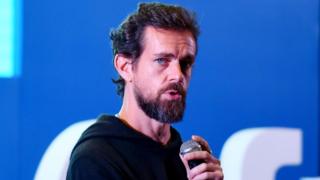
    Twitter CEO and Co Founder, Jack Dorsey addresses students at the Indian Institute of Technology (IIT)

    Image copyright
    Getty Images

    Image caption

    Jack Dorsey says the idea is “one tool” to address inequality of income, race and gender

    Twitter chief executive Jack Dorsey has become the first investor in a radical plan to give people a basic income, regardless of job status.

    He has donated $3m (£2.4m) to the scheme, which is being piloted by the mayors of 16 US cities.

    He said it was “one tool to close the wealth and income gap”.

    The idea of governments paying a basic income to citizens has gained momentum in response to the threat to jobs from artificial intelligence.

    The premise of universal basic income (UBI) is that every individual in a country will receive a cash payment at regular intervals, without any requirement to work or qualify for it. The payment would be given to every citizen, regardless of wealth or employment status.

    The US scheme, dubbed Mayors for a Guaranteed Income, is a version of this which would offer a recurring payment, but only to “some” residents.

    On its website, it is not made explicit who will receive payments but it talks of the need to address poverty, particularly in the light of the coronavirus pandemic.

    “Covid-19 has only further exposed the economic fragility of most American households and has disproportionately impacted black and brown people,” it says.

    “Mayors will come together in this network to advocate for a guaranteed income – direct, reccuring cash payments – that lifts all of our communities, building a resilient, just America.”

    There are no firm proposals for how money would be allocated, or for how long the scheme would last.

    Mr Dorsey tweeted: “This is one tool to close the wealth and income gap, level systemic race and gender inequalities and create economic security for families”.

    The project was founded by Stockton mayor Michael Tubbs, who wants it to become a national programme that will extend beyond the current pandemic.

    He has previously said that raising taxes of individuals such as Mr Dorsey could be one way to fund it.

    The 29-year-old is attempting to reinvent the Californian city he grew up in and has been experimenting with the idea of a universal income since 2018, paying $500 a month to 125 residents.

    Joblessness threat

    Image copyright
    Getty Images

    Image caption

    Robots could take many jobs currently done by humans, creating a global income shortage

    Talk of a universal basic income has been around for decades but has become closely associated with the idea of artificial intelligence – the argument being that as robots take over more jobs in society, humans will need a guaranteed annual income supplied by government.

    But Martin Luther King also suggested the idea in his 1967 book Where Do We Go From Here?

    AI expert Calum Chace said that a universal basic income could be some way off.

    “It is seen by many as a solution to the threat of joblessness as machines automate more and more of our jobs in the coming years and decades,” he said. “Unfortunately, it is wholly unaffordable if it offers anything more than abject poverty.

    “But if, say, [in] a generation from now machines do take most of our jobs, we should all be able to live the lives of leisure that economists like Maynard Keynes promised long ago – if, that is, we can achieve the economy of abundance, where the cost of a very good standard of living falls close to zero.

    “The idea of fully automated luxury capitalism is the next big thing, once people understand the limitations of UBI.”

  • Free home insulation: Too good to be true?

    A builder installing thermal roof insulation

    Image copyright
    Getty Images

    It sounds too good to be true: free money to make your home cosy and cut your fuel bills.

    But this is exactly what is planned for England’s homeowners from September.

    That’s when the government aims for a triple whammy – creating thousands of jobs in home insulation while reducing carbon emissions from boilers and shaving energy bills.

    Campaigners call this £2bn scheme a “no brainer” policy. So what will it mean for you?

    Green homes grant

    The Green Homes Grant – which was revealed in Chancellor Rishi Sunak’s summer statement – will be available via a website in two months’ time.

    You will apply for a voucher of up to £5,000 worth of work, of which you will pay one third or less.

    If your income is low, you will get £10,000 worth of work and you won’t pay a thing.

    A qualified retrofit coordinator will visit your home and assess how you can reduce your need for heating.

    Then the work will be done. Your home should be warmer in winter and cooler in summer.

    What improvements can you get?

    We are awaiting details from the government, but it looks as though the scheme may cover:

    • Loft insulation
    • Wall insulation
    • Underfloor insulation
    • Double and triple glazing
    • Eco-friendly boilers, heat pumps, low-energy lighting and energy-efficient doors

    The scheme will apparently involve a “whole house approach”, whereby a retrofit co-ordinator will determine what measures will ensure the best value for money for you and the taxpayer in your home.

    It could mean your refurbishment priority list starts off with loft insulation, then wall insulation, then underfloor insulation, for instance.

    Experts debate whether double and triple glazing should have qualified for the scheme.

    These windows often impress the neighbours, but some think it offers relatively poor value for money when it comes to saving energy.

    Will home owners have to deal with lots of contractors?

    Again, we need details. But it is clear many small firms are only certified by their trade organisation to carry out work within their field of expertise.

    For instance, I rang a specialist in underfloor spray insulation, to ask if he could stop draughts letting in cold air from my timber floor. He said yes.

    I also enquired if he could also install those fiddly insulating strips on doors and doors. He said no.

    Will the retrofit co-ordinator handle all the trades people you will need? This is yet to be decided.

    How complicated is insulation?

    Well, simple draught-proofing may be tedious but it is effective and the choices on offer are limited. But other forms of insulation generate a blizzard of possibilities.

    With solid walls, should you insulate inside – which shrinks your room size? Or should you do it outside – which usually makes your house look different?

    For suspended wooden floors, should you get a robot to spray under the boards? Or lift the boards and fit foam blocks between the rafters? Or should you use natural insulation based on the cannabis plant, hemp?

    Hopefully the retrofit co-ordinator will help you choose.

    What could go wrong?

    The last time the government tried a big energy saving scheme – the Green Deal – it exploded in their faces.

    Unlike this new plan, nothing was free. Instead householders were offered loans with interest so high they would have saved money going to the bank manager.

    Some of the small number of people who took up the scheme found dreadful faults. Insulation badly installed can create damp.

    Unsurprisingly, the scheme was scrapped.

    Image copyright
    Getty Images

    But that has led to another problem. An industry had grown up with a workforce to provide insulation but as installation numbers collapsed, that industry has shrunk.

    Can it be resurrected by September?

    One expert said it could take between six and 12 months to set up a watertight scheme yet the government wants all the £2bn fund spent by the end of March.

    What guarantee will there be for home owners?

    This is a crucial issue. The most successful warm homes schemes worldwide have been when experts visited your home after the work was done to check you’re satisfied.

    Joanne Wade from the energy conservation specialists ADE said: “We’re going to need much better quality control than the Green Deal had.

    “If there’s something wrong it’ll have to be fixed or consumers will lose faith in the scheme and turn their backs on it.”

    Is the scheme ambitious enough?

    Some green groups say the £2bn figure is inadequate. But experts who’ve been campaigning on the issue for decades say it’s probably about right, as it will be hard to get all the money spent in the time available anyway.

    But they insist that the same amount of cash must be spent year on year and extra private investment has to be attracted too.

    Without that, they say, the government won’t sustain the jobs, won’t meet its target for warm homes and won’t meet its goals for cutting carbon emissions either.

    Follow Roger on Twitter.

  • ‘I left Smile Bank today due to the ongoing outage’

    Smile Bank customer Emma Hopkinson-Spark

    Image copyright
    Emma Hopkinson-Spark

    Image caption

    Smile Bank customer Emma Hopkinson-Spark left the bank on Friday due to the ongoing probelms

    Smile Bank customers have been unable to access their online banking accounts for five days in a row.

    The online-only bank, owned by Co-Operative Bank, said it was working urgently to resolve the problem.

    But the latest service outage proved to be the “last straw” for longtime customer Emma Hopkinson-Spark.

    After 16 years, she left Smile Bank on Friday after she was unable to view a crucial re-mortgage payment.

    “I’m really disappointed in Smile Bank,” Ms Hopkinson-Spark, chief of staff at a tech consultancy business in Weston-super-Mare, told the BBC. “The outages this week were the tipping point.”

    Ms Hopkinson-Spark said she had not been able to access her online banking account for several days. Although she can still withdraw money from cash machines and pay for items using her debit card, she cannot send payments or view her payments.

    “Yesterday my husband rang me in a flap saying he was trying to pay for groceries and didn’t have money in his account,” she said. “He needed me to transfer money to his account and I couldn’t.”

    Her frustration came to a head when her mortgage firm said they had sent a payment of almost £100,000 to her current account, but she could not see it there or do anything with the funds.

    She decided to close her current account, cash ISA and savings account with the bank and is transferring her funds to a different bank.

    Smile Bank, which has around 100,000 customers, has apologised for problems with its online banking and mobile app, but it was unable to provide the BBC with a reason for the outage, or say when the problem would be fixed.

    Image copyright
    Smile Bank

    Image caption

    Customers have complained that Smile Bank is not communicating with them about the outages

    “We’re sorry that our Smile customers have been unable to use our mobile app and online banking as they would usually in recent days,” the company said in a statement.

    “We are working hard to restore their access as soon as possible and we apologise for any inconvenience caused.

    “Customers can use their cards and make transactions as normal and if they need support with their account they can call our customer service team.”

    ‘We’re getting really panicked’

    Vicky Wevell, a self-employed editor in Nailsea, near Bristol who has been with the bank for 20 years, said Smile Bank’s mobile app had gone downhill in recent years, with outages for hours at a time.

    Like other Smile Bank customers who spoke to the BBC, she said a lack of communication during the recent issues had made her worried about the safety of her funds.

    “I’m really angry actually and have been getting progressively angrier this week,” she said. “It’s less to do with the outage and more to do with their communication.”

    She said she was also on the verge of switching banks, because she could not see which invoices for work done had been paid by her clients.

    “How are we supposed to do any business?” she said. “[We’re] getting really panicked, is our money secure?”

    Making enquiries

    Jackie Smart, an office administrator in Aylesbury, said it took days for the bank to put a notice up about the outage on its website and communication remains difficult.

    Image copyright
    Getty Images

    “I’m feeling frustrated and worried because I don’t know what’s happening. You can get through on the automated service to hear your balance when you ring through, but it’s actually waiting to speak to somebody that takes a long time,” she said.

    Set up in 1999, Smile Bank was one of the earliest online-only banks. Its parent company, Co-Operative Bank, is owned by a number of hedge funds, which last year were reportedly exploring a sale of the business.

    The BBC understands that the outage is caused by an issue that is only affecting Smile Bank’s platforms, but not other brands owned by Co-Operative Bank.

    Smile Bank customers have been advised to call the bank if they require assistance with their accounts on 03457 212212 during opening times, which are: Monday-Friday 08:00-18:00 BST, and on weekends between 09:00-17:00 BST.

    As call waiting times may vary, the bank told the BBC that customers can also to contact Smile Bank’s Twitter and Facebook accounts to make queries.

  • Coronavirus: Emirates set to cut 9,000 jobs, citing pandemic

    Emirates president Sir Tim Clark

    Image caption

    Emirates president Sir Tim Clark

    The president of Emirates said the Middle Eastern airline is set to cut as many as 9,000 jobs because of the coronavirus pandemic.

    It is the first time the world’s biggest long-haul carrier has disclosed how many jobs will be lost.

    Prior to the crisis, Emirates had 60,000 staff.

    Sir Tim Clark said the airline had already cut a tenth of its staff but said: “We will probably have to let go of a few more, probably up to 15%.”

    The global airline industry has been severely impacted by coronavirus, with activity all but grinding to a halt.

    In an interview with the BBC, Sir Tim said Emirates was “not as badly off as others”.

    But its current situation marks a steep turnaround in the fortunes of the airline, which he said before the pandemic was “heading for one of our best years ever”.

    The job cuts sweeping the wider aviation industry are fuelling concern amongst Emirates staff that things might get worse.

    The BBC understands there is growing frustration at what they see as poor communications and transparency from the airline.

    At least 700 of the airline’s 4,500 pilots were given redundancy notices this week, which means at least 1,200 have been told their jobs are going since the coronavirus crisis started.

    Image copyright
    Reuters

    The cuts have been focussed on those who fly Airbus planes, rather than Boeing aircraft.

    Emirates flies superjumbo Airbus A380s which hold around 500 passengers. Whereas the Boeing 777s it flies hold fewer passengers and are therefore easier to fill during this period of decreased airline travel.

    00Thousands of cabin crew have also been told they are no longer needed.

    Further cuts

    The International Air Transport Association, which represents 290 airlines, is forecasting that the world’s airlines will lose more than $84bn and one million jobs this year.

    This week United Airlines, one of the big three in the US, warned its staff that it may have to cut 36,000 staff because of the huge fall in demand for air travel.

    Helane Becker, managing director and senior research analyst at investment firm Cowen said given “the continuing issues surrounding the pandemic” she expects US airlines to cull up to 200,000 of their 750,000 staff this year.

    US aviation unions are pushing the federal government to add to the $25bn bailout package it has provided so far.

    As part of the conditions for receiving state help, airlines have to protect jobs until the end of September.

    But IATA says there are wider benefits in doing so.

    A spokesman said the scale of job cuts in the aviation sector “shows the severe economic crisis facing the industry and all who depend on air connectivity”.

    Adding that its perfectly understandable that governments have put restrictions in place to try and keep people safe from coronavirus “but this should be done in the full knowledge of the economic and social consequences”.

    Watch Sir Tim Clark’s full interview on “Talking Business with Aaron Heslehurst” this on BBC World News at Saturday 2330 GMT.