Image caption
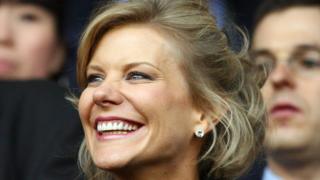
Amanda Staveley is claiming damages over an emergency fundraising by Barclays in 2008.
A former Barclays executive has apologised to financier Amanda Staveley after telephone transcripts of sexist remarks were released in court.
Stephen Jones made offensive comments about the businesswoman to another Barclays executive in 2008.
Mr Jones quit as head of lobby group UK Finance in June after admitting he had made “thoroughly unpleasant” remarks.
But details of his strong language were only released on Thursday during legal action she is taking against Barclays.
Ms Staveley says her company PCP Capital is owed money for its role in Barclays’ emergency fundraising in 2008, which allowed the bank to avoid a government bailout.
PCP, which led a fundraising by Abu Dhabi investors, is claiming damages of up to £1.5bn for alleged deceit over the terms of parallel fundraising that Barclays undertook with Qatar.
The bank denies wrongdoing and has dismissed the case as misconceived and without merit.
Finance chief quits over Amanda Staveley comments
Ex-Barclays bankers call female boss a ‘dolly bird’
Mr Jones’ highly personal comments about Ms Staveley were made during a conversation with Barclays’ then head of compliance. They included remarks about her breasts, relationships, and strong language was used about her being “thick”.
At one point during the telephone conversation the two men discuss if someone was recording the call. “It’s okay,” the head of compliance responded. “Your line’s not taped and neither is mine. I hope.”
Disclosure of the comments come after other conversations about Ms Staveley and her professional competence were previously aired in court.
Former Barclays executive Roger Jenkins, who was leading negotiations with Qatari investors in 2008, referred to Ms Staveley as “the tart” during conversations with colleagues, the court has heard. Another executive called her a “dolly bird”.
Mr Jenkins and Mr Jones, who started testifying in the case on Thursday, have both apologised to Ms Staveley. Mr Jones has since described his comments as “wholly inappropriate”.
“Stephen [Jones] regrets making these comments and has not sought to defend them and will not seek to do so,” a spokesman said. “He was very grateful and touched that Amanda Staveley has accepted his apology.”
Ms Staveley is currently working on a deal which could see a Saudi consortium take control of Newcastle United football club.
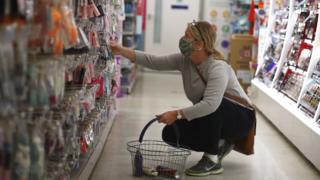
Full guidance on wearing face coverings in shops in England has been released, less than 12 hours before the new rules come into force.
Coverings will be mandatory in enclosed public spaces including supermarkets, indoor shopping centres, transport hubs, banks and post offices.
They must also be worn when buying takeaway food and drink, although they can be removed in a seating area.
Those who break the rules could face a fine of up to £100.
And police will be able to “use force” to remove customers from shops if they do not wear face coverings, as well as prevent them from entering, guidance from the College of Policing says.
However, forces have said they will only be enforcing the rules, including issuing the £100 fines, as a last resort – and officers will not be patrolling premises.
There are exemptions to the new rules for children under 11, those with disabilities or certain health conditions, such as respiratory or cognitive impairments that make it difficult for them to wear a face covering.
Public Health England has warned parents not to buy coverings for babies and young children because of the risk of choking or suffocation.
Skip Twitter post by @PHE_uk
We’ve been made aware that face coverings for babies and very young children are available for sale in England.
Children under the age of three should NOT wear face coverings, as they could cause choking or suffocation. pic.twitter.com/vmTMMdwioJ
— Public Health England (@PHE_uk) July 23, 2020
End of Twitter post by @PHE_uk
It is not compulsory for shop workers to wear face coverings but the government said it “strongly” recommended that employers consider their use where appropriate.
The government said it was the responsibility of individuals to wear one, although businesses are encouraged to take steps to encourage customers to follow the law, such as with signs.
Sainsbury’s and Costa Coffee have already said their staff will not challenge or enforce customers who enter their stores. Asda said enforcement was the “responsibility of the relevant authorities”.
But Waitrose said it will have staff at the entrance reminding customers of the rule, while Greggs and McDonalds said takeaway customers need to wear masks.
Masks will not be mandatory in indoor venues which have other safety measures in place, including:
Eat-in restaurants
Pubs
Hairdressers and salons
Gyms and leisure centres
Cinemas, concert halls and theatres
Visitor attractions like museums
Image copyright Getty Images
Image caption
The government said evidence suggests that when used correctly, face coverings may reduce the chance of infecting others
The government has been accused of mixed messaging over wearing masks in takeaways, with trade bodies and MPs saying there had been confusion about how the rules would apply.
A Department of Health spokesman said: “If you are in a premises where you are able to sit down and consume food or drink that you have bought, then you can remove your face covering in order to eat and drink on site.”
The criticism came after ministers and Boris Johnson’s official spokesman contradicted each other over how the rules would apply to takeaways and sandwich shops.
Speaking before the guidance was published, Kate Nicholls, chief executive of UK Hospitality, said the messaging from the government had been contradictory and it was “very late in the day” for the guidance to be confirmed.
Unison official Jon Richards also said the UK “was late to the table on face coverings and now people don’t know what they should do”.
He said the rules on face coverings were in place for shops and public transport but not for some other enclosed spaces such as libraries, register offices and civic centres. “The public needs clarity to end the muddle,” he said.
Media playback is unsupported on your device
Media captionHow to wear a face covering
According to the government, face coverings should cover the mouth and nose and can be as simple as a scarf or bandana that securely fits around the side of the face without having to be held in place.
The requirement to wear face coverings at transport hubs – railway and bus stations, airports and maritime ports – only applies for those areas which are fully indoors and enclosed.
You are allowed to remove a face covering in certain situations, for example to prove identification in banks or when buying age restricted products.
Face coverings have been compulsory in shops in Scotland since 10 July. Shoppers are not currently required to wear them in Wales or Northern Ireland, although NI will wait until 20 August before deciding whether to make them compulsory.
Coverings are already compulsory on public transport in England and Scotland, as well as most buses, trains and ferries in Northern Ireland. They will be mandatory on public transport in Wales from 27 July.
Can police make me cover my face?
The Police Federation, which represents front-line officers, says they can’t spend their time patrolling thousands upon thousands of outlets.
Shop staff and security guards can already detain shoplifters while waiting for the police to arrive and police leaders hope shop managers will refuse non-mask wearers entry – rather than turning to the police to solve the problem.
Met Commissioner Dame Cressida Dick has said that police in London would only enforce the wearing of coverings in shops “as a last resort” – if people not wearing a covering refused to leave a shop or became “aggressive”.
Read more here.
Tracy Cannard, who works in a supermarket and is a representative of the shopworkers’ union USDAW, said while increasing numbers of customers were choosing to wear masks this still only amounted to around 20% and making it compulsory would help her feel safer.
James Lowman, chief executive of the Association of Convenience Stores, said he was advising its members to communicate the rules on face coverings through posters and informal conversations – rather than challenging customers who did not wear one.
He said incidents of verbal and physical abuse of shop workers had increased during lockdown and retailers did not want to risk creating a “flashpoint” for confrontation.
The head of the Trades Union Congress, Frances O’Grady, also warned the new rules could put staff at risk of abuse. “The new rules requiring shoppers to wear masks may further risk staff safety, she said.
“Shop staff are not required to police the wearing of face masks – employers must make this clear. And every employer must publish a risk assessment that sets out how they will safeguard staff from abusive customers and those who refuse to wear masks.”
Abuse could also be directed at disabled people who are exempt from the rule, a disability charity has warned.
Fazilet Hadi, a policy manager at Disability Rights UK, said there had already been “horrific stories” of disabled people being confronted about not wearing a mask, and has called for a government advertising campaign to raise awareness of the exemptions.
Health Secretary Matt Hancock said “everyone must play their part” by following the new guidance.
“As we move into the next stage of easing restrictions for the public, it is vital we continue to shop safely so that we can make the most of our fantastic retail industry this summer,” he said.
“I also want to thank the British public for all the sacrifices they are making to help keep this country safe.”
In other developments:
Two more areas in England – Luton and Blackburn – have been marked as “areas of intervention”. They join Leicester and Oadby & Wigston, where local lockdowns are in place
A network of coronavirus-testing walk-in centres is to be set up across England in an attempt to persuade more people to come forward for testing during the winter
People in Scotland who are shielding – those considered to be at the greatest risk of Covid-19 – will be able to go to pubs and restaurants with outdoor spaces from Friday
Speaking during an official trip to Orkney and the north of Scotland, Boris Johnson hailed the response of the pandemic as showing the “sheer might” of the UK union
The number of people who have died after testing positive for coronavirus rose by 53 to 45,554, according to government figures released on Thursday.
Do you have any questions about wearing masks?
In some cases your question will be published, displaying your name, age and location as you provide it, unless you state otherwise. Your contact details will never be published. Please ensure you have read the terms and conditions.
Use this form to ask your question:
If you are reading this page and can’t see the form you will need to visit the mobile version of the BBC website to submit your question or send them via email to . Please include your name, age and location with any question you send in.
The UK and EU have said they still remain some way off reaching a post-Brexit trade agreement, following the latest negotiations in London.
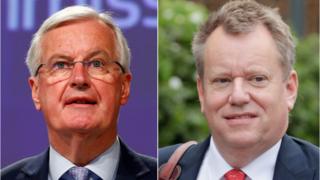
EU chief negotiator Michel Barnier said a deal looked “at this point unlikely” given the UK position on fishing rights and post-Brexit competition rules.
His UK counterpart David Frost said “considerable gaps” remained in these areas, but a deal was still possible.
The UK has ruled out extending the December deadline to reach a deal.
This was the second official negotiation round to be held in person since the coronavirus crisis, after both sides agreed to “intensify” talks in June.
The two sides’ chief negotiators are due to meet informally in London next week, with another round of official talks scheduled for mid-August in Brussels.
Speaking after the talks, Mr Barnier said the UK had not shown a “willingness to break the deadlock” over fisheries and post-Brexit rules on competition.
“By its current refusal to commit to conditions of open and fair competition and to a balanced agreement on fisheries, the UK makes a trade agreement at this point unlikely,” he told reporters.
He said there was a risk of no deal being reached unless the UK changed course on the topics, which were “at the heart” of the EU’s trade interests.
He added that an agreement would be needed by October “at the latest” so it could be ratified before the current post-Brexit transition period ends in December.
‘Pragmatic approach’
In a statement, Mr Frost said fisheries and the rules on competition – known as “level playing field” provisions – remained the “most difficult areas”.
He said he still believed a deal could still be reached in September, but the government must “face the possibility” one will not be struck.
But he added the EU had shown a “pragmatic approach” over British demands to limit the role of the European Court of Justice after the transition period ends.
If the last four years, or even 40 years, have taught us anything about negotiations and the European Union, it is that they go on a bit and rarely are they concluded without the deadline being not just imminent, but, well…pretty much now.
And this is not that point, yet.
It was always very unlikely this would be the moment where a document would be pulled triumphantly from the inside of a suit pocket, a deal done.
When Michel Barnier says a trade agreement between the UK and the EU is “at this point unlikely”, your eye is drawn towards that word “unlikely”.
But “at this point” matters too.
Both sides are still talking and compromise likes to turn up fashionably late.
None of this guarantees there will be a deal – there may not be.
But both sides want one, if they can find one they can live with.
And remember, whatever happens between now and New Year’s Eve, things will be different next year.
Legally, Brexit happened at the end of January this year.
In practical terms, it happens at the start of January next year.
Media playback is unsupported on your device
Media captionConfused by Brexit jargon? Reality Check unpacks the basics.
Mr Frost said the UK, which has so far insisted on a series of separate deals in different areas, was also willing to consider a “simpler” structure for an agreement.
However he conceded previous UK demands for an “early understanding” on the principles of a deal by this month would not be reached.
He said EU offers to break the deadlock had so far failed to honour the “fundamental principles which we have repeatedly made clear”.
Each side says the other needs to make a move. And if there is to be a deal, it will probably come at the eleventh hour.
That means compromises will have to emerge in September before a deal is agreed in October – leaving both sides just enough time to ratify an agreement before the end of the year.
There have been suggestions of potential progress this week – on the role of the European Court of Justice and on the overall structure of a future agreement.
But differences between the two sides are substantial, and go to the heart of what the Brexit process is all about: how closely aligned will the UK be with the EU in the future?
For the UK sovereignty is key; for the EU the priority is to protect the integrity of its single market.
And for now, the two sides often seem to be talking past each other in public.
Read more of Chris Morris’s analysis on what’s happening in post-Brexit trade talks
State aid dispute
Mr Barnier said that to agree a deal, the EU would require “robust” guarantees from the UK over its future rules for providing state support to companies.
He criticised the UK for providing “no visibility” on its future regime in this area, and called for it to share more details of its plans.
The UK is due to stop following EU “state aid” rules at the end of the transition period, and has not unveiled details of its subsequent regime.
Prime Minister Boris Johnson has previously said he wants to make it easier for the UK government to provide assistance to struggling firms.
Image caption
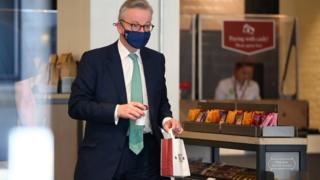
Minister Michael Gove was seen wearing a face mask when buying takeaway food on Tuesday, after being photographed not wearing one the previous week
The government has been accused of mixed messaging over where people will have to wear face coverings when new rules come into force.
They will be compulsory in shops in England from Friday – but full guidance is yet to be published.
Trade bodies and opposition MPs said confusion remained over takeaways.
Minister Brandon Lewis said face coverings would be mandatory when purchasing takeaway food and drink, but not if you are eating at the premises.
“If you are going into a takeaway and you are eating in somewhere that’s got a takeaway, then that is like hospitality. You are eating – it’s not practical to wear a face mask, we recognise that,” the Northern Ireland Secretary told BBC Breakfast.
“But if you are going in to buy a product and leaving again, then you are treating it like a shop and you should be wearing a face mask.”
A Department of Health spokesman said: “If a shop or supermarket has a cafe or a seating area to eat and drink, you can remove your face covering in that area.”
However, Kate Nicholls, chief executive of UK Hospitality, said this contradicted what the industry had previously been told by the government and it was “very late in the day” for this to be confirmed.
“It’s really unhelpful to have that confusion because the single biggest thing we need now is to rebuild consumer confidence and that needs clear, unambiguous messaging,” she told BBC Breakfast.
The new regulations will only be published on Thursday, less than 24 hours before they come into effect.
The criticism came after Mr Hancock and Boris Johnson’s official spokesman contradicted each other over the rules on takeaways and sandwich shops.
The health secretary said last week: “You do need to wear a face mask in Pret because Pret is a shop. If there’s table service, it is not necessary to have a mask. But in any shop, you do need a mask. So, if you’re going up to the counter in Pret to buy takeaway that is a shop.”
But the prime minister’s spokesman later said: “We will be publishing the full guidance shortly but my understanding is that it wouldn’t be mandatory if you went in, for example, to a sandwich shop in order to get a takeaway to wear a face covering.”
Media playback is unsupported on your device
Media captionHow to wear a face covering
Face coverings have been compulsory in shops in Scotland since 10 July. Shoppers are not currently required to wear them in Wales or Northern Ireland, although this is being considered.
Health Secretary Matt Hancock announced on 14 July that wearing a face covering in shops and supermarkets would be compulsory from Friday, 24 July, with anyone failing to comply facing a fine of up to £100.
The same exemptions as for public transport will apply, with children under 11 and people with breathing problems not required to wear a covering.
Anyone who cannot put on, wear or remove a face covering because of a physical or mental illness or impairment or disability is also exempt.
Can police make me cover my face?
The Police Federation, which represents front-line officers, says they can’t spend their time patrolling thousands upon thousands of outlets.
Shop staff and security guards can already detain shoplifters while waiting for the police to arrive. However, the general power of the citizen’s arrest is only exercisable to apprehend criminals committing offences that would go before a judge and jury. A penalty ticket for being socially obnoxious would not cross that high bar.
Police leaders hope shop managers will refuse non-mask wearers entry – rather than turning to the police to solve the problem.
Met Commissioner Dame Cressida Dick has said that police in London would only enforce the wearing of coverings in shops “as a last resort” – if people not wearing a covering refused to leave a shop or became “aggressive”.
Read more here.
Liberal Democrat health spokesperson Munira Wilson called for urgent clarity for businesses and to help people feel safe.
“Clear communication is critical in a public health crisis. Instead, this confusion on guidance shows ministers simply could not organise a bun fight in a bakery,” she told the PA news agency.
“All this stinks of ministers making it up as they go along instead of listening to the experts.”
Tracy Cannard, who works in a supermarket and is a representative of the shopworkers’ union USDAW, said while increasing numbers of customers were choosing to wear masks this still only amounted to around 20% and making it compulsory would help her feel safer.
James Lowman, chief executive of the Association of Convenience Stores, said the body was advising its members to communicate advice on face coverings through posters and informal conversations rather than challenging customers who did not wear one.
He said incidents of verbal and physical abuse of shop workers had increased during lockdown and retailers did not want to risk creating a “flashpoint” for confrontation.
Face coverings are already compulsory on public transport in England and Scotland, as well as most buses, trains and ferries in Northern Ireland.
They will be mandatory on public transport in Wales from 27 July.
Do you have any questions about wearing masks?
In some cases your question will be published, displaying your name, age and location as you provide it, unless you state otherwise. Your contact details will never be published. Please ensure you have read the terms and conditions.
Use this form to ask your question:
If you are reading this page and can’t see the form you will need to visit the mobile version of the BBC website to submit your question or send them via email to . Please include your name, age and location with any question you send in.
Image caption
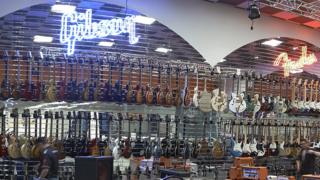
Guitars are in demand, big amplifiers not so much
Life under lockdown has seen a surge in amateur musicians and podcasters, says the UK’s biggest online retailer of instruments and sound equipment.
In the April-to-June period, Gear4music saw the value of UK sales rise 80% on the same time last year to £21.2m.
Among the big sellers were electric and acoustic guitar starter bundles, which contain all the accessories required for a budding player to get picking.
Digital pianos also sold particularly well, said chief executive Andrew Wass.
“People are interested in having a really good hobby that they can get into,” he told the BBC.
“Maybe they played music at school and have found themselves indoors and decided to come back to it.”
Why is there a hierarchy of musical instruments?
The secret life of musical instruments
Mr Wass said home studio equipment, including microphones and recording software, was popular as well.
“It seems everybody wants to be a podcaster and they’re buying into really professional set-ups at home,” he added.
Sound systems
Founded in 2003 and based in York, Gear4music employs 460 people and exports all over the world.
Including international sales, its quarterly figures were up 68% year-on-year to £37.3m.
Image copyright Rob Cook
Image caption
Andrew Wass of Gear4music says more people have turned to music as a hobby
Mr Wass said the first three weeks of lockdown had been “the most difficult weeks of my business life”, as the firm adapted its working environment to the new coronavirus conditions.
“But the staff were very keen to continue and it’s thanks to them we’ve been able to do so,” he said.
Mr Wass said that sales rises had come “across the range of what we do”.
The only items that have not been so popular during lockdown have been PA systems and speakers for gigs – “anything to do with live performance in a venue,” he said.
With live music events falling victim to quarantine, demand for ear-blasting amplifier stacks has dried up, but Mr Wass is hopeful that things are about to change as restrictions ease.
“That’s coming back a little bit now, but it’s been very difficult,” he added. “Fortunately, we’ve made up for it in other areas.”
Image caption
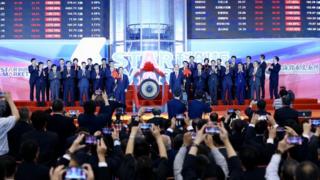
China’s Star market launched a year ago this week in Shanghai
The Star market, China’s answer to the Nasdaq, celebrates its first anniversary this week.
The tech-heavy stock market was set up at the request of President Xi Jinping as relations with the US began to sour.
Officially called the Shanghai Stock Exchange Science and Technology Innovation Board, it now includes more than 120 firms.
It’s already Asia’s most valuable stock market, valued at more than $400bn (£314bn).
This month it hit a record level in terms of new listings as it raised more than $7bn, a 46% increase on July 2019 according to figures from data firm Refinitiv.
This was boosted by last week’s listing of semiconductor manufacturer SMIC, China’s biggest share sale in a decade.
Experts believe the Star market is in a strong position to attract listings from both Hong Kong, given the political tensions there, and the US which is clamping down on the listing of Chinese firms.
Nasdaq to tighten rules amid concerns over Chinese firms
The man trying to stop the virus (and fix China’s image)
But can it rival the Nasdaq 100 which is more than 20 times bigger?
The Nasdaq (National Association of Securities Dealers Automated Quotations) stock market includes its biggest tech firms within an index called the Nasdaq 100.
This index features some of the world’s most valuable technology companies including Apple, Microsoft and Amazon. It was worth almost $10tn at the end of 2019.
To mark its first year anniversary, the Star market announced on Thursday that it was also splitting off its biggest listings, to be included in the Star Market 50 Index.
“The move to fully open the Chinese capital markets is obviously a long term reality – so the success of a mainland-type Nasdaq is always going to happen in the future,” said Andy Maynard, managing director at China Renaissance investment bank.
“The reality of the size and complexity of China’s new economy play will always make China attractive globally – just as Nasdaq has done since the ‘dot.com’ days.”
“The conditions are very attractive and would definitely make the Star Market a worthy rival of the Nasdaq,” added Jacob Doo, chief investment officer at Envysion Wealth Management.
A major factor is that the Star market’s listing requirements “are less stringent as compared to the Nasdaq, which has imposed restrictions on IPOs for Chinese companies”, Mr Doo said.
Ant Group – Alibaba’s financial arm – plans to list on the Star market this year and could attract more tech companies to follow suit.
Chinese carmaker Geely, which makes London black cabs, also has plans to list on the Star market.
However, experts say the Star market needs to be more accessible to foreign investors to continue to attract more listings.
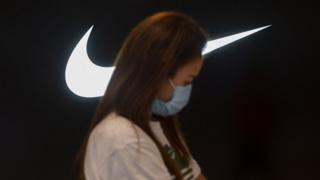
Corporate giants including Nike face growing calls to cut ties with suppliers alleged to be using “forced labour” from China’s Uighur people.
Activists have launched a campaign accusing firms of “bolstering and benefiting” from exploitation of the Muslim minority group.
The US has also ramped up economic pressure, warning firms against doing business in Xinjiang due to the abuses.
Nike and other brands have said they are tracking the issue.
Nike said it was “conducting ongoing diligence with our suppliers in China to identify and assess potential risks related to employment of Uighur or other ethnic minorities”.
It said it does not source materials directly from Xinjiang, the region in western China that is home to much of the country’s Uighur population and many of the factories said to use the labour.
Apple also said it had investigated the claims. “We have found no evidence of any forced labour on Apple production lines and we plan to continue monitoring,” the firm said.
Who are the Uighurs?
China ‘using birth control’ to suppress Uighurs
Politicians and activists say companies need to do more if they do not want to be complicit in the Chinese government’s human rights abuses.
“Brands and retailers should have left long ago, but they haven’t and that is why this public call to action is important and necessary,” said Chloe Cranston of Anti-Slavery International, one of the more than 180 organisations involved in the pressure campaign.
“It’s not just about ending a relationship with one supplier. It’s really about taking a comprehensive approach.”
What is happening in Xinjiang?
Reports by the Australian Strategic Policy Institute (ASPI) and the US Congress, among others, have found that thousands of Uighurs have been transferred to work in factories across China, under conditions the ASPI report said “strongly suggest forced labour”. It linked those factories to more than 80 high-profile brands, including Nike, Apple and Gap.
China, which is believed to have detained more than one million Uighurs in internment camps in Xinjiang, has described its programmes – which reportedly include forced sterilisation – as job training and education.
Officials say they are responding to risks of extremism and have dismissed claims of concentration camps as “fake”.
Media playback is unsupported on your device
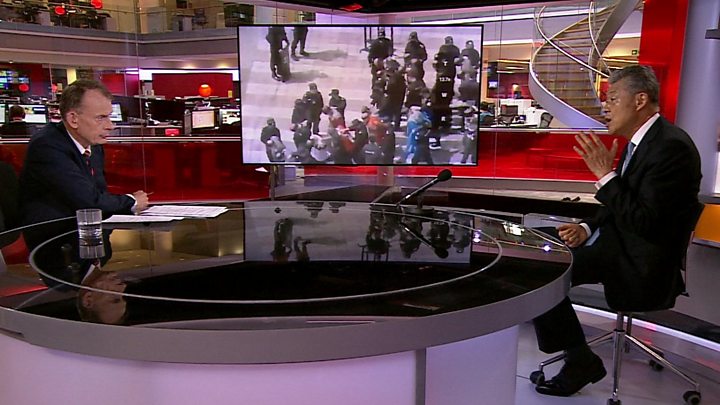
Media captionChina’s ambassador Liu Xiaoming: “There is no such concentration camp in Xinjiang”
Omer Kanat, executive director of the Uyghur Human Rights Project, said getting companies to shift business away from Xinjiang is critical to convincing the Chinese government to change its policies.
“Until now, there have been condemnations of what the Chinese government has been doing but there have not been any actions,” he told the BBC. “The Chinese government will not do anything unless there are some real impacts, so therefore targeting the companies means a lot.”
Image copyright Getty Images
Image caption
Xinjiang produces an estimated 80% of China’s cotton
What are governments doing?
The call for action comes as the US has also ramped up economic pressure over the issue.
This month, it sanctioned Chinese officials overseeing the region and warned firms against doing business in Xinjiang.
American border officials also seized a shipment of 13 tonnes of hair products from the region worth an estimated $800,000 (£628,000), while the Commerce Department blacklisted 11 more companies – suppliers said to work with firms such as Apple – a move that limits the ability of those firms to buy US products, citing abuses.
Image copyright US Customs and Border Protection (
Image caption
One of the products seized in the US
Lawmakers in the US Congress are considering legislation to explicitly ban imports from Xinjiang, while politicians in the US and in Europe have also threatened legislation that would force companies to monitor the issue more closely.
“Companies all over the world must reassess their operations and supply chains and find alternatives that do not exploit the labour and violate the human rights of the Uighur people,” said US congressman James McGovern, who leads a committee on China.
Mr Kanat said he believes an international movement is growing, pointing to recent comments by UK Foreign Secretary Dominic Raab, who accused China of “gross and egregious” human rights abuses and said sanctions could not be ruled out.
“This is encouraging,” he said. “It is the first step.”
What do the companies say?
The activist campaign is focused on clothing brands because Xinjiang produces the majority of China’s cotton, which accounts for about 20% of the world’s supply.
Apparel companies said they were taking the issue seriously.
Nike said after it confronted one of its suppliers, Taekwang Group, about the issue, the firm stopped recruiting employees from Xinjiang at one of its factories. The sportswear company said that Taekwang said those workers “had the ability to end or extend contracts their contracts at any time”.
“This remains an issue of critical importance,” the firm said. “We are continuing to draw on expert guidance and are working with brands and other stakeholders to consider all available approaches to responsibly address this situation.”
Image copyright Getty Images
Image caption
A Taekwang Group factory
Gap also said it has policies that bar involuntary labour in its supply chain and does not source clothing directly from Xinjiang.
“We also recognize that a significant amount of the world’s cotton supply is grown and spun there,” it added. “Therefore, we are taking steps to better understand how our global supply chain may be indirectly impacted.”
UK accuses China of ‘gross’ abuses against Uighurs
‘Forced labour’ Chinese hair imports seized by US
Other companies disputed the claims that their supply chains were tainted.
Adidas said it had never sourced products from Xinjiang and the company cited in the ASPI report had falsely claimed to be a supplier.
“The adidas workplace standards strictly prohibit all forms of forced and prison labour and are applicable to all companies across our supply chain,” it added. “The use of forced labour by any of our partners will result in the termination of the partnership.”
Apple said it had not found any issues, despite conducting several surprise audits of its long-time supplier O-Film – one of the firms cited by the US Commerce Department.
Some of the Chinese companies accused of using forced labour from Uighur workers have also disputed the claims.
“We absolutely have not, do not, and will never use forced labour anywhere in our company,” said the Esquel Group, a Hong Kong based shirt-maker, reportedly a manufacturer for brand such as Lacoste.
It added that it was “deeply offended” by the US decision to add it to its export blacklist this week.
“We are working with all relevant authorities to resolve the situation, and we remain committed to Xinjiang as we are proud of our contribution in the region over the last 25 years.”
Image caption
Janice Dunphy, owner of the Web Adventure Park indoor play centre
As the nation gradually unlocks, nightclubs and soft play centres still don’t know when it will be their turn to reopen.
“On Friday there was the devastating news that everybody else apart from ourselves and nightclubs could open,” says Janice Dunphy, owner of the Web Adventure Park indoor play centre in York.
“We’ve been closed now 133 days so it’s really difficult to accept,” she told BBC Radio 5 Live’s Wake Up To Money.
Indoor play centres, along with nightclubs, have not yet been given permission to reopen and so far no date has been set for them to work towards.
That’s leaving business owners such as Janice unable to plan for a return of their customers and the financial boost that would provide.
Recent weeks have seen non-essential shops, theme parks and outdoor play areas reopen and at the start of August it will be possible for bowling alleys, casinos and ice rinks to welcome customers back.
But as Boris Johnson announced the lifting of those restrictions, as well as a return to full services for beauticians, he added: “Nightclubs and soft play areas will sadly need to remain closed for now – although this will be kept under review.”
Janice says: “My financial director told me we have to lose £200,000 off our wage bill over the next 18 months. Some of the staff that we’ve had to let go have families.”
Image copyright Janice Dunphy
For the Web Adventure Park that meant significant redundancies, as they could not afford for furloughed staff to continue accruing holiday pay.
“We used to have 65 staff but I’ve just made nine redundant and had to lay 20 off temporarily. Then we have 20 staff working in the nursery, which is still open.
“The ones we have had to lay off are mostly the younger workers, the 18-year-olds.”
‘No clarity’
Janice is not just a business owner, she also sits on the management committee for the British Association of Leisure Parks, Piers and Attractions.
It claims that up to two-thirds of soft play centres could close by October if they don’t receive support that reflects their extended lockdown.
“We have supported everything that we’ve been asked to do,” says Janice. “I actually produced the reopening protocol that was approved by [the Health and Safety Executive] so we’ve ticked every box as far as we’ve been asked.
“We would remove ball pits and anything that was a potential hazard would be taken out. Our members have foggers that they can clean surfaces with.”
Image copyright Janice Dunphy
“However there’s been no clarity, nothing has come back from government. There’s questions as to why certain industries that are indoors that have large numbers like inflatables parks, like trampoline parks can open but we can’t.
“If we had some idea of why, if we could speak to the government and ask why we could answer some of the questions but we’ve had no communication at all.”
‘Really frustrating’
The nightclub sector is another that remains locked down despite the easing of restrictions elsewhere.
“I think what’s really frustrating with our nightclub is we just have no idea when we might be able to reopen and it’s really hard to plan that way,” says Charlie Gilkes, a nightlife entrepreneur and the co-founder of Inception Group, which includes a nightclub.
“We understand that nightclubs are quite hard to operate with any social distancing in place, they are social environments, but we just need to have some sort of clarity of when they think it will be, even if that’s next year.
“And we need some sort of promise that the furlough scheme will be extended for nightclubs so that our staff can remain on that and there can be some specific support for the businesses which aren’t allowed to open.”
A Ministry of Housing, Communities and Local Government spokesman said: “We recognise the frustration of businesses which have had to remain closed because of the pandemic and we are working to help them reopen as soon as it is safe.
“We are also providing businesses and their employees with an unprecedented package of support during this national emergency including £330bn worth of government backed and guaranteed loans and the Coronavirus Job Retention scheme.”
You can hear more of these interviews by downloading the Wake Up To Money podcast.
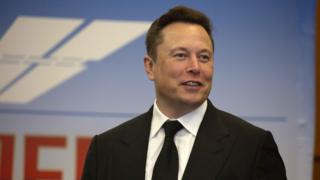
Electric car maker Tesla has shrugged off the economic upheaval caused by the pandemic to report its fourth quarterly profit in a row.
The California company earned $104m (£82m) in the three months to 30 June, with the growth setting it on course for inclusion in the S&P 500.
That means Tesla’s shares, already surging, will see even more demand from investors who track the index.
The stock crested higher in after-hours tradingon publication of the results.
Tesla said its bottom line was helped by salary cuts as well as the opening of its new factory in China, where costs are lower.
Boss Elon Musk said the firm is focused on growth, with other plants in the works, including one in Germany and a new one he announced would be located near Austin, Texas.
“I’ve never been more excited and optimistic about the future of Tesla in the history of the company,” Mr Musk said.
Ahead of expectations
In the US, the pandemic forced boss Elon Musk to keep the company’s main factory in California closed until mid-May.
While the shutdown weighed on the firm’s output, it still beat analyst expectations.
Tesla said it produced 82,272 cars and delivered 90,650 to customers, down about 5% from the same quarter in 2019. The decline hit revenue, which also fell about 5% to $6bn.
But the overall resilience marks a contrast with rival car-makers, such as General Motors, many of which have reported sales declines of more than 30%.
Tesla said it still hoped to deliver on promises to make 500,000 vehicles this year.
“We have the capacity installed to exceed 500,000 vehicle deliveries this year, despite recent production interruptions,” the company said. “While achieving this goal has become more difficult, delivering half a million vehicles in 2020 remains our target.”
Image copyright Getty Images
Tesla’s share price has nearly quadrupled since the start of the year, from $430 to more than $1,550.
The eye-popping increase has added to the long-running debate over Tesla, which many critics maintain is overvalued.
This month, the firm overtook Toyota as the world’s most valuable carmaker, with a market worth of almost $300bn – although the Japanese company sold about 30 times more cars last year.
Tesla had posted years of losses since its start. Achieving a fourth quarter in a row of profit makes it eligible for inclusion in the S&P 500, though its addition would have to be approved by the committee that governs the index.
Nicholas Hyett, equity analyst at Hargreaves Lansdown, said this could lead to a further rise in the share price, but he warned: “While questions about the group’s long term future may be a thing of the increasingly distant past its valuation remains a sore point for many.”
On 1 May, Mr Musk himself tweeted Tesla’s share price was too high. The rise puts him in line for another major payday and has helped propel him into the ranks of the world’s 10 richest people, according to billionaire rankings by Bloomberg and Forbes.
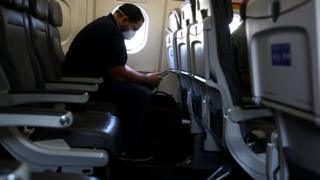
The aviation and holiday industry are due to hold urgent talks with government this week in a bid to bring coronavirus testing to airports.
Companies say testing could end quarantine restrictions and save what’s left of the key holiday season.
It is hoped that Covid-19 testing could be introduced at UK airports by the start of September.
Negative results would free travellers from quarantine rules when arriving in the UK from high risk areas.
Sources at a steering group that is in talks on behalf of the industry say that once the government is happy that the Covid-19 test results are of a verified and of a certified health and scientific standard, they could then be used.
The Polymerase Chain Reaction (PCR) swab test that is proposed in airports is the type in operation at NHS facilities across the UK.
Nurses would carry out the airport swab tests at clinics run by medical firm Collinson. The company has said previously the trial is about “modifying” the quarantine.
Passengers would pay for the tests themselves. A negative result could take as little as five hours, but the aim would be to notify every participant within 24 hours.
The Department for Transport declined to comment.
Airlines call for joint US-EU virus testing scheme
Virus drives airlines to ‘worst’ year on record
Sources who have spoken to the BBC have expressed their frustration at the slow response of government to make testing in airports happen.
The holiday and aviation sectors has been crippled by the pandemic. Tens of thousands of jobs have been lost at airlines and handling companies as the skies closed for months.
The lucrative transatlantic route between Europe and North America is seen as crucial to trade and holidays.
On Tuesday, US Vice-President Mike Pence called for a unified approach to airport testing to get people flying again and allow travellers to be freed of quarantine restrictions.
Image copyright Getty Images
Those close to this new steering group expect that routes from specific cities in the US to London could be prioritised because of their importance to trade, such as New York or Dallas.
Major tour operators such as TUI and Jet2 restarted their holiday operations to popular European holiday destinations about a fortnight ago. Numbers were down on the previous year but they have seen some demand bounce back.
Renewed concerns
But there are now major worries about the coronavirus infection rate in Spain.
Earlier this week, Spain’s north-eastern Catalonia region recorded a daily Covid-19 infection figure of more than 1,000, leading to new new restrictions. And at the weekend residents in Barcelona were advised only to leave their homes for essential trips.
Regional authorities on Spain’s Balearic island of Majorca on Wednesday ordered the immediate closure of bars on three streets popular with hard drinking tourists to limit the potential for coronavirus outbreaks.
Concerned that many tourists are not respecting social distancing guidelines, authorities elected to close the venues on the Platja de Palma strip in the capital Palma, and at Magaluf, a favoured haunt with young Britons.
If public health measures meant that Spain is re-categorised and taken off the quarantine-free travel list, it would pose tremendous problems for the aviation industry.
One leading voice in the sector said “this industry relies on Spain, take it out and there will be major problems”.
The source said the industry was worried about what would happen to the thousands of UK holidaymakers who are currently in Spain and whether they need to quarantine on return.
The travel sector is also concerned that those who are booked to travel in coming weeks could get cold feet and begin a second avalanche of cancellations and refunds.
These problems could be negated with the acceleration of a rigorous testing programme in airports, something the aviation industry has been pushing for for months.
Despite criticism of the government’s quarantine scheme and its impact on the travel industry, ministers have insisted that public health must came first.