Category: iT news

  • Google Pixel Buds: ‘Hissing’ bugs those with good hearing

    Google has released its Pixel Buds headphones in the UK with an unfixed flaw.

    When the Pixel Buds were released in the US in April, some people complained that they could hear a persistent “hissing” sound when the earbuds were used to play music.

    The high-frequency noise appears to be outside the range of hearing for some wearers, so not everybody can hear it.

    Google told the BBC that instances of distortion were “very rare” and it hoped to fix the issue in a future software update.

    BBC Click’s Chris Fox was putting the Google Pixel buds to the test – along with the Apple AirPods Pro and Sony WF-1000XM3 earbuds – when he noticed the Pixel Buds “hissing”.

  • OnePlus says the Nord will come with Google Messages and Phone pre-installed

    Ahead of its debut on July 21st OnePlus released an Instagram video indicating its Nord phone will come with Google’s Messages and Phone apps installed instead of its own SMS and dialer, 9to5Google reported. The device also will have Google’s Duo video chat app pre-installed, according to the video.

    Why OnePlus decided to roll with Google’s apps isn’t clear, but it’s apparently in pursuit of the “smoothest-est” Android experience, according to the video. As 9to5Google notes, using Google Messages provides Nord users with access to RCS messaging.

    OnePlus has said the Nord, slated for an augmented reality launch event on Tuesday, will be a “more affordable” device. The Instagram video references “a pretty great price,” but doesn’t offer specifics, however OnePlus said in a video last month the Nord will cost under $500.

    Along with several official announcements, other details about the new phone have leaked over the past few weeks. OnePlus confirmed its name and said the Nord will be powered by a Snapdragon 765G 5G processor, 6.55-inch 90Hz OLED display, 6GB of RAM, and 128GB of internal storage. It’s also expected to have a 48-megapixel main camera and a 16-megapixel wide-angle lens.

    The OnePlus Nord is expected to be released first to users in Europe and India.

  • The Secrets of How IBM Maintains AI Leadership


    IBM is chasing two of the three technology areas that I think will change the world as we know it over the next two decades. The three technology changes that I’m watching are robotics, AI computing, and quantum computing. IBM’s focus has been on AI and quantum computing. I got an update on their AI efforts last week, and they have moved the ball a lot over the last few months.

  • The Linux Foundation’s First-Ever Virtual Open Source Summit | Community

    The success of The Linux Foundation’s first virtual summit may well have set the standard for new levels of open source participation.

    Summit masters closed the virtual doors of the four-day joint gathering on July 2. The event hosted the Open Source Summit + Embedded Linux Conference North America 2020 and ended with more than 4,000 registrants from 109 countries.

    The online attendance platform offered registrants a virtual experience that provided an immersive experience for event participants, according to The Linux Foundation (LF).

    That virtual attendance feeling was as close as possible to what they would have received at a face-to-face event, Kristin O’Connell, director of event marketing at The Linux Foundation, told LinuxInsider.

    One of the newcomers in technical trendsetting at this first virtual conference was the FinOps Foundation. The FinOps Foundation includes 1,500 individual members across the globe, representing more than 500 companies with more than US$1 billion in revenue each.

    In the same way that DevOps revolutionized development by breaking down silos and increasing agility, FinOps increases the business value of cloud by bringing together technology, business, and finance professionals with a new cultural set, knowledge skills and technical processes, LF maintained.

    “Where there is technology disruption, there is opportunity for business transformation. FinOps is exactly this and represents a shift in operations strategy, process, and culture,” said Mike Dolan, vice president and general manager of Linux Foundation Projects.

    “This type of disruption and transformation is also where community and industry-wide collaboration play critical roles in enabling a whole new market opportunity. We’re pleased to be the place where that work can happen,” Dolan added.

    Virtual Experience on Many Levels

    The online platform InXpo enabled participants to be part of a real immersive technical gathering. They also can view on-demand content of sponsor resources and conference sessions for one year.

    The InXpo platform enabled attendees to:

    • View 250+ informative educational sessions and tutorials, across 14 different technology tracks, and participate in live Q&A;
    • Join the ‘hallway track’ and collaborate via topic-based networking lounges in group chats, and connect with attendees in 1:1 chats;
    • Visit the 3D virtual sponsor showcase and booths to speak directly with company representatives, view demos, download resources, view job openings and share contact info.

    The summit’s virtual format also provided attendees the chance to “gamify” their event experience by earning points and winning prizes for attending sessions, visiting sponsor booths, and answering trivia questions.

    FinOps Gets Summit Boost

    On the first day of the virtual summit, LF announced its intent to host the FinOps Foundation to increase education and best practices for the emerging FinOps discipline of cloud operations. With this announcement, LF will also be offering a new, free edX course, “Introduction to FinOps,” that will be available beginning July 21.

    The exposure the Open Source Summit provided to the FinOps Foundation was instrumental in advancing the organization’s goals, according to J.R. Storment, FinOps Foundation’s executive director.

    “The keynote coverage by Linux Foundation executive director Jim Zemlin, combined with the addition of the FinOps Certified Practitioner (FOCP) training and certification on training, has driven a spike in registrations and membership requests for the FinOps Foundation,” he told LinuxInsider.
    The July training courses have sold out, and future ones are filling quickly, added Storment.

    The FinOps community is defining cloud financial management standards and is increasing access to education and certification for this discipline across industries. Members include Atlassian, Autodesk, Bill.com, Nationwide, Nike, and Spotify.

    Summit Fuels OpenPOWER Embedded Linux Deal

    The OpenPOWER Foundation announced at the summit a major technology gift to the open source ecosystem. The OpenPOWER Foundation contributed the IBM A2I POWER processor core design and associated FPGA environment.

    That announcement follows the opening of the POWER Instruction Set Architecture (ISA) last August. This latest announcement further enables the OpenPOWER Foundation to cultivate an ecosystem of open hardware development.

    The A2I core is an in-order multi-threaded 64-bit POWER ISA core developed as a processor for customization and embedded use in System on Chip (SoC) devices. It was designed to provide high streaming throughput while balancing performance and power.

    A2I is a powerful technology with a wide range of capabilities, said Mendy Furmanek, president of OpenPOWER Foundation and director of POWER Open Hardware Business Development at IBM. The goal is to see what the open-source community can do to modernize A2I with today’s open POWER ISA and to adapt the technology to new markets and diverse use cases, she said.

    The strong foundation of the open POWER ISA and the addition of the A2I core are accelerating the open-source hardware movement faster than ever, added James Kulina, executive director of the OpenPOWER Foundation.

    “A2I gives the community a great starting point and further enables developers to take an idea from paper to silicon open source,” he said.

    Virtual Summit Effective

    The first virtual summit experience for both the FinOps Foundation and the LF in general held some significant highlights, noted FinOps’ Stormant.

    For example, FinOps experts from Atlassian, LiveRamp, and Pearson all shared war stories of how to build cost awareness into the development process of engineering teams.

    “Their stories highlighted a consistent theme of the challenges that cloud brings when combined with agile development: how to ensure that engineering teams can move fast and innovate quickly but also keep budgets predictable,” he explained.

    Stormant suggested that the overall experience could help deal with the biggest challenges facing FinOps in the upcoming year.

    The biggest challenge is driving a culture of cost accountability into engineering teams who are not used to thinking of cost as a metric they need to consider during development, he added.

    “Encouraging good cost behavior requires a cross-team collaboration with finance and business teams to provide real-time visibility into the impact on infrastructure choices on cloud spend, and ultimately the bottom line of the company,” he said.

    Developing trust between the engineering teams and their finance/business counterparts is a huge challenge, and also a critical step in the journey to the cloud, he added.

    Additional Resources

    The summit event platform will continue to be accessible for one year. You can also still visit sponsor booths and revisit the virtual experiences, including the LF’s Slack workspace which will remain open indefinitely.

    The LF will upload all of the summit sessions onto its YouTube channel in the coming weeks. These uploads will include captioning for all sessions.

    You can access the platform here, and
    see other Linux Foundation events happening online in 2020 here.

    Want the notes? Instead of sitting through replays of the presentations, you can focus on reading crowd-sourced notes of the virtual conference events here.

    You can find links to other announcements made at the summit in the Virtual Press Room.


    Jack M. Germain has been an ECT News Network reporter since 2003. His main areas of focus are enterprise IT, Linux and open source technologies. He has written numerous reviews of Linux distros and other open source software.
    Email Jack.

  • Google Clamps Down on Ads for Spyware, Stalkerware | Internet

    By John P. Mello Jr.

    Jul 14, 2020 7:49 AM PT

    Advertising for software and hardware designed to stalk and spy on people will soon be banned on Google.

    Promotion of products or services that are marketed or targeted with the express purpose of tracking or monitoring another person or their activities without their authorization will be prohibited on the platform starting August 11, the company, which is owned by Alphabet, announced Friday in its ads policies center.

    Under a change in the Google Ads Enabling Dishonest Behavior policy, the ban will include advertising for spyware or malware used to monitor texts, phone calls, or browsing history, as well as hardware, such as GPS trackers specifically marketed to spy or track someone without their consent, and surveillance equipment — cameras, audio recorders, dash cams, nanny cams — marketed with the express purpose of spying.

    The ban doesn’t include advertising for private investigation services or products designed for parents to track or monitor children.

    Google noted that violators of the policy will receive at least seven days notice before their account on the platform is suspended.

    Loopholes

    Security blogger Graham Cluley pointed out that the exemption for software that allows parents to track their children could be a big loophole in the new policy.

    To dodge the policy, he wrote in his blog, “all a stalkerware company needs to do is pose as a ‘family safety’ app, which helps you keep track of your young children.”

    “Sadly, I doubt Google’s ad ban will stop stalkerware apps from promoting themselves, it’s just they may no longer be able to be quite so explicit in their online adverts about how they are most likely to be used,” he added.

    There may be other loopholes, too.

    “Google is banning ads from app developers and about the apps themselves, but what about the ads about the blog with an article on the top 10 surveillance apps to download?” asked Liz Miller, vice president and a principal analyst with Constellation Research, a technology research and advisory firm in Cupertino, Calif.

    “That isn’t about an app. It’s about content,” she told TechNewsWorld. “Is that going to be a loophole?”

    “This is a great headline maker,” she added, “but the reality is I can still search for ‘spy app’ and they’re still going to come up in my Google search results.”

    Limitless Capabilities

    Miller maintained Google’s new policy is looking beyond malicious persons.

    “What Google is responding to is the realization that these apps are being used not only by individuals who have malicious intent, but also criminal enterprises — especially when you start talking about apps that allow you to follow and track an individual’s movements and see content on their devices without their knowing about it,” she said.

    “That’s a very slippery slope into some very dangerous privacy territory that Google doesn’t want anything to do with,” she added.

    Software for spying and stalking people is a very serious problem, observed David Ruiz, a blogger for Malwarebytes Labs, a cybersecurity software maker based in Santa Clara, Calif.

    “The capabilities of these types of apps are nearly limitless — they can pull text messages, emails, and call logs; reveal sensitive photos and videos; expose web browsing history; and pinpoint a person’s GPS location,” he told TechNewsWorld.

    “In the hands of an abuser,” he continued, “these types of apps could make safety planning for a survivor extremely difficult, dismantling their attempts to privately call a domestic abuse hotline, find help from a friend or family member, or to physically escape.”

    Industry Response

    The damage caused by the spying and stalking software can be severe, added Chlo Messdaghi, vice president of strategy at Point3 Security
    , a provider of training and analytic tools to the security industry located in Baltimore, Md.

    “It gives someone the power to abuse a victim psychologically, which affects them physically and emotionally for years and years,” she told TechNewsWorld.

    “And when victims go to the FBI and device manufacturers and carriers, more often than not, they get no response,” she said.

    “Google should have done this years ago. It’s illegal,” she observed. “A lot of us in the security space are astounded that companies still allow stalkerware to exist in their shops or their sites may carry ads for it.”

    The stalkerware problem has prompted an industry response.

    “To further improve the detection of such software in the cybersecurity industry, many organizations are joining the Coalition Against Stalkerware to share their knowledge and protect users against stalkerware,” explained Tara Hairston, head of government relations for Kaspersky Lab North America, an information security software company located in Woburn, Mass.

    “Beyond detection, further research on the link between cyberviolence, physical violence, and the gendered nature of stalkerware use is crucial in order to develop a clearer picture and better understanding of this issue,” she told TechNewsWorld.

    Fall and Rise of Stalkerware

    Hairston noted that Kaspersky saw a decline in stalkerware infections among its global mobile users during the first four months of 2020, to 8,163 in April from 11,532 in January.

    “It is our educated guess that this decrease may be related to the lockdown situation around the globe,” she said.

    Since most stalkerware is used to spy on an intimate partner, she continued, “nowadays the need for this type of app should be declining. There is no necessity to spy on partners when they’re locked down together.”

    That trend may be changing, though, a report released by another cybersecurity company, Avast, found a 51 percent increase in the United States in the use of software for spying and stalking individuals from March to June, compared to the first two months of the year.

    James McQuiggan, the security awareness advocate at KnowBe4, a security awareness training company located in Clearwater, Fla., noted that the pandemic has created a fertile environment for malicious actors intent on spreading bad apps.

    “Knowing that most people who use the Internet throughout the day are people at work, it’s become a target-rich environment for cyber criminals,” he told TechNewsWorld.

    “End users are more exposed and vulnerable at home than inside a building with coworkers, IT support, and network protections,” he explained.


    John P. Mello Jr. has been an ECT News Network reporter
    since 2003. His areas of focus include cybersecurity, IT issues, privacy, e-commerce, social media, artificial intelligence, big data and consumer electronics. He has written and edited for numerous publications, including the Boston Business Journal, the
    Boston Phoenix, Megapixel.Net and Government
    Security News
    . Email John.

  • Apps help orthopaedic patients prepare for surgery

    The coronavirus pandemic has meant healthcare systems having to delay non-emergency surgery.

    In England the NHS delayed more than two million planned operations to free up hospital beds for potential Covid-19 patients.

    Doctors around the country are now looking at ways they can remotely assist thousands of patients waiting for joint surgery. This includes the creation of apps and new tools to monitor patients in new and detailed ways.

    BBC Click’s Jen Copestake finds out more.

    See more at Click’s website and @BBCClick

  • Samsung Reveals 6G Vision | Mobile Tech

    By John P. Mello Jr.

    Jul 15, 2020 4:00 AM PT

    Although many people haven’t wrapped their minds around 5G mobile technology yet, Samsung has already started talking about 6G.

    In a report released Tuesday, the South Korean electronics giant reveals its 6G vision of the future, including technical and societal megatrends, new services, requirements, candidate technologies, and an expected timeline of standardization.

    “While 5G commercialization is still in its initial stage, it’s never too early to start preparing for 6G because it typically takes around 10 years from the start of research to commercialization of a new generation of communications technology,” Sunghyun Choi, head of Samsung’s Advanced Communications Research Center, explained in a statement.

    In its report, Samsung predicted that earliest commercialization of 6G could occur as early as 2028, with mass commercialization taking place roughly two years after that.

    The standards groups that develop protocols for mobile telecommunications, known as the 3rd Generation Partnership Project, or 3GPP, roll new standards about every decade or so, noted Kevin Krewell, a principal analyst in the San Jose, Calif. offices of Tirias Research, a high-tech research and advisory firm.

    “Assuming there’s no big hang up in committees, the Samsung prediction seems about right,” he told TechNewsWorld.

    Leaving 5G in the Dust

    Samsung also sees the technology taking a huge performance leap over 5G networks, which are currently barely getting off the ground. Peak data rates for 6G will be 1,000 gigabits per second, or about 50 times that of 5G, and air latency — the time between when an instruction is issued and when it’s performed — of 100 microseconds, or one-tenth the latency of 5G.

    “The goals of 6G will be to take 5G to the next level of magnitude on bandwidth and latency,” Krewell said.

    “The overall goal is to make 6G connectivity even more reliable and robust than 5G, allowing more connected services, such as radio connected drones and real-time augmented reality glasses,” he continued.

    Diagram of key performance requirements between 6G and 5G

    A comparison of key performance requirements between 6G and 5G (Credit: Samsung)


    Reliability will be a sensitive issue if 6G is used to control autonomous vehicles, observed Jack E. Gold, founder and principal analyst at J.Gold Associates, an IT advisory company in Northborough, Mass.

    “6G will need to expand on reliability because if you’re using things like autonomous vehicles, you can’t have signals going away and causing car crashes,” he told TechNewsWorld.

    In its report, Samsung maintained that 6G will be used for advanced services, such as immersive extended reality, high-fidelity mobile hologram and use of digital “twins” in virtual worlds.

    Use Cases

    Predicting use cases for 6G may be a little premature, however.

    “It’s hard to know what will be the technology that drives the adoption of 6G,” Krewell said. “In 2010, did we know that AR and VR, autonomous vehicles, and drones would be high on our list of uses for 5G?”

    “It’s really hard to conceptualize what the use cases for 6G might be, when we’re still trying to figure out the use cases for 5G,” added Jason Leigh, a senior research analyst for mobility at IDC, in Framingham, Mass., a market research company.

    Nevertheless, if 6G lives up to its speed and latency specs, it could be used in a variety of ways.

    “Features like these could support a wide range of advanced education, training and certification processes in various industries,” said Charles King, the principal analyst at Pund-IT, a technology advisory firm in Hayward, Calif.

    “They could also enhance remote support for healthcare and other hard to come by services for rural communities,” he told TechNewsWorld.

    “Immersive applications for product and industrial design are likely,” he added. “There will also likely be numerous military applications, from advanced communications to real-time battlefield analysis.”

    Propagation Problems

    Because 6G will be operating in the terahertz bandwidth, it’s expected to encounter problems similar to those currently facing 5G millimeter wave technology. That’s acknowledged in the Samsung report.

    “To cope with the difficult propagation characteristics of THz band,” the report noted, “it may be natural to enhance the massive MIMO technology that was introduced to support millimeter wave (mmWave) band in 5G. Since the THz band requires much more antennas than the mmWave band, there may be significantly more practical difficulties.” MIMO — multiple-input, multiple-output — is a way for multiplying the capacity of a radio link.

    “The challenge with millimeter waves is they can only travel three blocks, and they don’t penetrate doors very well,” Leigh told TechNewsWorld. “When you get up to that terahertz level, those propagation issues multiply.”

    Initially, wireless carriers will likely adopt the same phase-in strategy they’re using with their 5G transition when they introduce 6G. Early 6G phones will support 5G and 6G until the newer technology becomes ubiquitous.

    “You take the best of what’s already available and leverage that to take you to the next step,” Gold explained. “Eventually, you reach the next step and get rid of the older stuff.”

    More Machines Than People

    If 5G is any indicator, carriers could have problems selling 6G to consumers.

    “The sell for consumers seems pretty hazy,” King said. “That is, unless vendors come up with entirely new types of devices and form factors.”

    “Businesses which could utilize 6G features and functions to improve efficiency, lower costs or create new market opportunities seem the likeliest targets,” he added.

    However, consumers may not be playing as big a role in 6G adoption as they’ve played in past new generation rollouts.

    The Samsung report noted that it’s expected that the number of connected devices will reach 500 billion by 2030, which is about 59 times larger than the expected world population at that time of 8.5 billion.

    Mobile devices will take various form-factors, it continued, such as augmented reality glasses, virtual reality headsets, and hologram devices.

    Increasingly, it noted, machines will need to be connected by means of wireless communications. Such connected machines will include vehicles, robots, drones, home appliances, displays, smart sensors installed in various infrastructures, construction machines, and factory equipment.

    “As the number of connected machines grows exponentially, those machines will become dominant users of 6G communications,” the report maintained.

    “Looking back at the history of wireless communications, technologies have been developed assuming services for humans as the major driving applications,” it continued. “In 5G, machines were also considered in defining requirements and developing technologies.”

    “We expect new 6G technologies have to be developed specifically to connect hundreds of billions of machines taking into account what is required for machines,” it predicted.


    John P. Mello Jr. has been an ECT News Network reporter
    since 2003. His areas of focus include cybersecurity, IT issues, privacy, e-commerce, social media, artificial intelligence, big data and consumer electronics. He has written and edited for numerous publications, including the Boston Business Journal, the
    Boston Phoenix, Megapixel.Net and Government
    Security News
    . Email John.

  • 3 Apps to Help Golfers Get Into the Swing of Things | Mobile Apps

    Sports performance technology continues to advance and gain popularity as high-tech tools are utilized to enhance player performance in all types of athletics.

    Golf is no exception. Technology can be used to make aspects of this popular and challenging sport less difficult and frustrating, and more rewarding and enjoyable.

    For example, during the coronavirus lockdown many golfers continue to practice their game on high-tech training equipment such as in-home golf simulators.

    In addition to golf training equipment, thanks to innovation there are applications for smartphones, tablets and smartwatches to help golfers improve their game.

    Here are three apps that can help golfers improve their skills, locate courses, and book tee times to enjoy their next round.

    V1 Golf – Swing Analysis & Coaching

    Have you ever wanted to see how your swing compares to the best in the game? By recording your swing with the V1 Golf app, you can compare yours against the pros and use a full suite of tools to analyze exactly what you need to work on.

    V1 Golf app

    The app equips golfers with a full range of video tools, including the ability to send your videos to your instructor and receive voice-over video lessons with evaluations from your pro. If you don’t currently have a coach, you can connect with one of several thousand pros who teach with the V1 Sports network.

    Most golfers will find value in the V1 Golf App, but it will be especially valuable for players who are looking for consistent feedback from their instructors and aren’t always playing their home courses.

    V1 Golf Swing Analysis & Coaching app

    For younger players and aspiring pros that are on the road playing competitively in tournaments, updated instruction while away from home is a big benefit. The app also works well for those who travel often or can’t always make time for an in-person lesson with their instructor.

    On the flip side, golfers who are at their home course often and have the ability to see their instructor frequently on an in-person basis won’t see much benefit from this app’s technological edge. Additionally, for players who aren’t tech savvy, the ability to grasp and benefit from the capabilities of the app will likely not be realized.

    V1 Golf is available as a free download from the App Store and Google Play. In-app purchases are offered.

    GolfNow – Book Tee Times, Golf GPS

    With over 5,000 courses onboard, at any time of day or night users can book a tee time at courses in the U.S., England, Scotland, Wales, Ireland, Bermuda, Canada, and Mexico.

    GolfNow app

    Using your phone’s location services, the app shows golf courses in your area, making it an essential tool for any golfer that is always on the go, looking for nearby links.

    GolfNow is currently used by over 3 million golfers and now features a free golf GPS and golf rangefinders, scorekeeping and post-game analysis.

    The “Hot Deal” search function enables users to find various discounts and savings — and to get better prices on tee times, with weather protection.

    Also worth investigating is the GolfNow Rewards program, which allows you to automatically earn points on each round, and coupled with the GolfNow VIP membership, offers members additional savings and benefits.

    GOLFNOW Book TeeTimes Golf GPS

    While the GolfNow app features the ease of booking a tee time, one thing to keep in mind is that some users have reported issues trying to redeem rewards for weekend reservations — and as is the case with many promotions, other restrictions may apply.

    GolfNow is available as a free download from the App Store and Google Play.

    GolfLogix GPS + Putt Line

    The GolfLogix GPS + Putt Line app is a perennial worldwide leader in golf apps. Like other golf apps, it offers free GPS, scores and stats, but it also provides top-quality 3D course maps that give precise GPS distances to all hazards, layups and greens.

    GolfLogix GPS + Putt Line app

    Most impressive are the Approach and Putt Break views.

    The Approach view lets you see the green’s contours and the areas surrounding the green from the fairway. This tool helps to avoid the frustration of hitting that perfect shot, only to see the ball drift from the hole or even off the green. As you move your target on the hole overview, the app indicates which clubs are suggested to hit that target, as well as from the target to the green.

    The Putt Break view is a cool feature; although to use it there’s a need to precisely locate your ball and hole on the green map, and pull out your device after every putt, which can be distracting and time consuming. If you (and others in your group) can tolerate that, the app’s “Putt Line” feature shows a visual read of the putt’s line to help see breaks and determine speed, so you know how to aim your shot.

    Many users start off by only gauging their accuracy and speed on the putting green. The GolfLogix tech in the accuracy aspect is quite precise, but the speed gauge is less so.

    For each hole, the app provides up to four different distances, with a bird’s eye view, moveable target, approach view and putt break option.

    GolfLogix Golf GPS + Putt Line app

    By choosing the “Play Golf” tab you can search manually for a course or use your current location to create a list of courses nearby. There are more than 35,000 golf courses in the GolfLogix course library, with at least 12,000 that include 3D mapped greens. After making your selection, the course is quickly downloaded to your device and you’ll be ready to tee off.

    This app has a score and stat tracking feature like many of the GPS apps. GolfLogix improves on this by allowing users to customize which stats to keep and which to disregard. Trackable stats include putts, greens in regulation, driving distance, fairways hit, fairway and greenside bunkers, chips, pitches, penalties and missed putts. Whether keeping a simple score or compiling a bunch of stats on your round, inputting the data is done quickly and easily.

    Finally, users can access a personal round analysis and lessons via Golf Digest and get exclusive equipment deals from GolfNow and Golfsmith.

    GolfLogix GPS + Putt Line is available as a free download from the App Store and Google Play. In-app purchases are offered.

    Heading In

    Try these apps to find out which ones suit your golfing needs — and let us know what you think in the Reader Comments section below.

    Enjoy your next round — and remember to stay out of the bunkers!


    Jordan Fuller is a retired golfer, coach and mentor. With his love for the sport, he writes about it on Golf Influence, which provides tips to improve the game, how to perfect a golf swing, gear reviews, and more.

  • AutoTux is a Real Distro With a ‘No Hands’ Linux Installer | Reviews

    AutoTux is a fully automated Linux distribution that is literally a hands-off event from start to finish. It goes a long way to adopting Linux a no-brainer for Windows and macOS converts.

    AutoTux’s self-installing approach is also the kind of Linux operating system that makes you wonder why more distribution developers do not use similar strategies to make their Linux offerings such a foolproof proposition.

    After all, installing an operating system as a newcomer is scary and fraught with missteps and frustration. Some other Linux distro families have scripted installation routines that somewhat semi-automate the installation process. This is one of the hallmarks found with Arch Linux distro varieties.

    But Arch and other Linux families are not intended for Linux newcomers. Plus, the scripted installations are more like a patchwork of segmented batch commands initiated with command line interactions in a terminal window.

    This is not very user friendly. AutoTux, on the other hand, fully automates an installation of the Debian 10 Linux system. What else could any newcomer to the Linux operating system want or need?

    How about out-of-the-box performance and a fully-stocked software inventory? Well, AutoTux has that covered too!

    Ingenious Solution

    One of the recurring laments of people new to Linux is that the operating system is a dog to install, needs lots of post-installation configuration, and is difficult to use. A companion complaint is that you have to constantly use the command line interface (CLI) to maintain the system, add and remove applications and do just about everything else manually.

    Yes, that is true for some older Linux distros, Linux servers, and a few hard-core enterprise flavors of desktop Linux. But those complaints do not hold much water for more mainstream, popular Linux offerings. But still, newcomers to Linux can use all the help they can get when installing what to them is a strange, new operating system.

    Installing even the most refined Linux distributions can trip up even experienced users in the installation phase. I face that situation regularly in testing unfamiliar Linux distros. Inevitably, some part of the installation process just does not work as it does elsewhere. Mostly, that is the fault of having to partition the hard drive manually or set up dual boot configurations. Let’s face it: glitches happen.

    AutoTux, however, makes all of those problems disappear or never happen. It does this without trickery — and it does not leave you with a Linux installation that is less than fully functional.

    AutoTux is not a lightweight operating system. It installs an unadulterated Debian 10 Linux with an Xfce desktop environment. The distro has a macOS-like theme. You see the traditional panel bar at the top of the screen and a dock bar at the bottom.

    For those not familiar enough with Linux to know, many modern Linux distributions are based on Debian Linux. So think of AutoTux Linux as a wrapper for installing Debian 10 Linux.

    AutoTux Xfce desktop

    AutoTux uses the Xfce desktop environment with the panel bar at the top of the screen and a Docky panel at the bottom.


    Tux is the iconic symbol of the Linux operating system. So the distro’s name reflects the purpose this distro exists.

    Wanted: A Better Identity

    One of my big disappointments with AutoTux is a lack of personality or enthusiastic branding. The developer, Robert Spiteri, is mentioned in small print in a footnote credit at the bottom of the website’s “About AutoTux” page. No company affiliation or community supporters seems to exist.

    AutoTux also lacks much in the way of tweaking or modifications. Nothing about this distro has branding to the desktop environment or shows anything unique to distinguish AutoTux from other Xfce desktops or Debian Linux distros.

    Some Linux distros are like that. Hundreds of single-developer distros abound. Not having a brand or supporter affiliation does not make them bad operating systems. AutoTux’s developer shies away from notoriety and is not driven by any desire to expand or grow the user base.

    That is likely the background to why AutoTux exists. The aim of AutoTux is to provide students with a ready-made operating system and software packages which are not time-consuming to install and configure, according to the website.

    That stated purpose, however, is not limited solely to students, although students are the intended target users. The distro gives any user a no-hassle installation of a pure Debian “Buster” computing platform.

    A Unique Offering

    AutoTux is a little more than a generic operating system. Plus, it provides a foolproof hands-off installation to get new users started.

    In addition, this distro provides an interesting and very useful collection of software that expands upon the vast default software packages that come pre-installed with the system. For example, it comes with a selection of software handy to students involved with vocational IT, computing, robotics and ICT C3 courses in Malta, according to the website.

    Besides that, you also get nearly three dozen applications. These provide some of the best Linux options for Internet, graphics, productivity, desktop publishing, and programming. They all are included, so you don’t have to discover and download them separately.

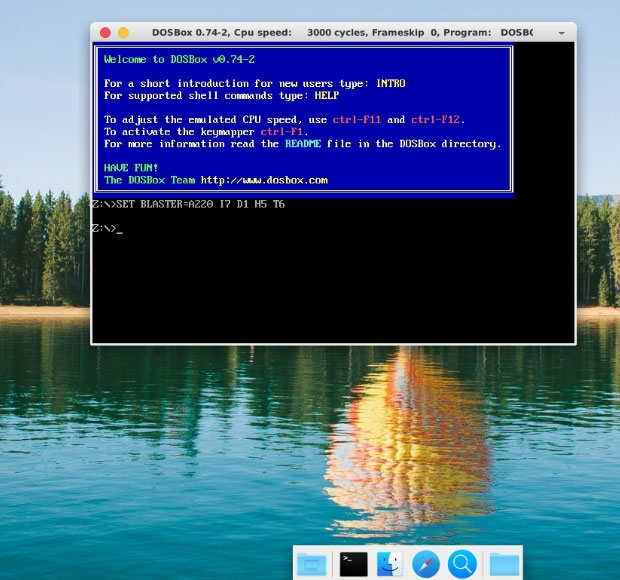
    AutoTux comes with DOSBOX, a DOS emulator

    AutoTux comes with DOSBOX, a DOS emulator that runs DOS-style games that you download from DOSBOX’s website.


    AutoTux’s chief function is to get new users up and running efficiently with no prior knowledge needed beyond how to convert the free ISO download to DVD or a bootable USB drive. Of course, an organization or family member can easily provide targeted users with an already-prepared installation disk to remove that potential barrier.

    Either way, AutoTux introduces new users — students or otherwise — to the world of open source computing. This distro can be a win-win proposition all around.

    WARNING! Read This Before Trying at Home

    The installation DVD or USB is potentially dangerous to an existing computer’s contents. Seriously, this installation process is not like a typical Linux live session.

    Live session environments let you boot a computer into a fully functional demonstration mode that runs in the computer’s memory and/or from the DVD or USB device. Live sessions usually give you the option to install the Linux distro to the host computer’s hard drive for permanent use.

    Otherwise, when you shut down the live session and remove the storage medium, the existing operating system remains intact. Not so with AutoTux.

    AutoTux does NOT have a live session environment. When you turn on the computer with the DVD or USB inserted, AutoTux will take a minute or two to boot the system and will then immediately begin to install Debian 10 Linux. This process is irreversible. No warning message or pause will wait for your confirmation to go ahead with the automatic installation.

    That leads to a precautionary step. Do not leave the storage medium laying around for someone to unknowingly use. Doing so will wipe out the existing contents, both operating system and personal data. It cannot be undone.

    Killer Installation

    As noted above, you cannot preview how AutoTux Linux works on your computer. So be very sure you have the existing operating system’s backup disks handy in case you want to reinstall it.

    Installation is simple. You have nothing to do once you insert the installation medium and turn on your computer. The installation process takes about 30 minutes, depending on the speed of your computer. No network connection is needed to get online, since all packages are on the installation media.

    Absolutely no interaction occurs between you and the computer from the time you put the ISO in the optical drive or plug in a USB drive with the installation files copied to it and you remove the disk, press Enter and reboot the computer.

    One gotcha moment happens when the installation process completes. You will know it is finished because the display no longer flashes code and gibberish-like comments rapidly across the screen.

    The last printed message tells you to NOT REMOVE THE INSTALLATION MEDIUM YET BUT PRESS THE ENTER KEY.

    Ignore that direction.

    Instead, do remove the installation medium and press the Enter key. Otherwise, the installation process will start all over again, and again, and again…You get the idea!

    It is strange that the developer never fixed this glitch.

    Bottom Line

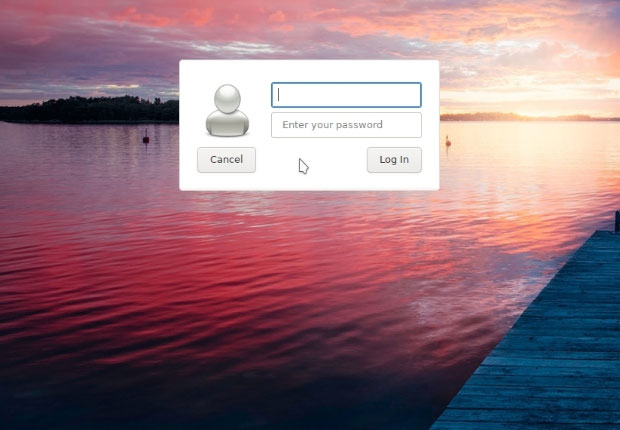
    When you reboot the computer, the opening screen will ask you for the username and then the password. Enter: tux for both.

    When you get to the desktop, you should go into system settings in the main menu and change the username and password to something more secure.

    AutoTux login screen

    The login screen is the first thing you see when the installed AutoTux loads. Use “tux” (with no quote marks) for both the username and the password. Be sure to create a new username and password from the system menu.


    The current version of AutoTux is 2.0 – autotux_2.0-190903_amd64, released on September 3, 2019. So the next thing you should do is go to the package manager and update. Version 1 – autotux_1.0-190820_amd64 was released one month earlier.

    Keep in mind that AutoTux is a very young distro. However, Debian 10 is very up-to-date and stable.

    Since there is no live session environment for AutoTux, be sure your computer meets these minimum system requirements:

    • 3GB RAM
    • 2GHz dual core processor
    • 20GB free disk space (20GB+ recommended for a smooth running experience of the operating system)
    • Graphics card and monitor capable of 800 x 600 resolution

    Want to Suggest a Review?

    Please
    email your ideas to me, and I’ll consider them for a future Linux Picks and Pans column.

    And use the Reader Comments feature below to provide your input!


    Jack M. Germain has been an ECT News Network reporter since 2003. His main areas of focus are enterprise IT, Linux and open source technologies. He has written numerous reviews of Linux distros and other open source software.
    Email Jack.

  • Fahim Saleh: Pathao and Gokada CEO’s assistant charged with his murder

    Image shows Fahim Saleh

    Image copyright
    Reuters

    Image caption

    Fahim Selah was best known for his role in creating popular start-ups in Nigeria and Bangladesh

    A man has been charged with the murder of leading tech entrepreneur Fahim Saleh who was found dead in New York on Tuesday, police say.

    The body of Saleh, 33, was found decapitated and dismembered in his Manhattan apartment.

    His 21-year-old executive assistant Tyrese Haspil has been arrested and charged with second-degree murder.

    The suspect is alleged to have owed Saleh tens of thousands of dollars, police said.

    The entrepreneur was best known for his role in creating popular ride-sharing companies in Nigeria and Bangladesh.

    Mr Haspil is accused of using a taser on Saleh and then fatally stabbing him on Monday.

    “[The suspect] handled [Saleh’s] finances and personal matters,” NYPD Chief of Detectives Rodney Harrison told reporters after the arrest on Friday.

    “It is also believed that he owed the victim a significant amount of money.”

    Image copyright
    Reuters

    Image caption

    New York Police Chief of Detectives Rodney Harrison announced the arrest on Friday

    Saleh’s body was discovered by his cousin who checked on him on Tuesday afternoon after he had not been seen for several days, Chief Harrison said.

    According to US media reports, CCTV footage from the building in which Saleh lived showed him entering a lift with a man wearing a mask on Monday.

    His body was discovered with an electric saw placed nearby, police said.

    Who was Fahim Saleh?

    The 33-year-old was the son of Bangladeshi immigrants and created his first company while still in high school.

    He went on to co-found the ride company Pathao, which is popular in Bangladesh and Nepal, in 2015.

    More recently, he helped found the Nigerian motorbike taxi app Gokada. But the company faced a setback after authorities in Lagos banned motorbike taxis earlier this year.

    Both companies have paid tribute to the entrepreneur.

    Gokada described Saleh as “a great leader, inspiration and positive light for all of us” in its tweet.

    Hussain M Elius, who co-founded Pathao with Saleh, told Bangladesh’s Daily Star newspaper: “Fahim believed in the potential for technology to transform lives in Bangladesh and beyond.

    “He saw the promise in us when all we had was a common purpose and a shared vision. He was, and will forever remain, an incredible inspiration for Pathao and our entire ecosystem.”