Category: iT news

  • TikTok to exit Hong Kong ‘within days’

    TikTok logo on screen.

    Image copyright
    Getty Images

    TikTok has said it will quit Hong Kong after China imposed a new security law on the city.

    “In light of recent events, we’ve decided to stop operations of the TikTok app in Hong Kong,” a spokesman told the BBC.

    The company’s exit from the city will come “within days,” according to the Reuters news agency.

    Facebook and Twitter said this week they were “pausing” co-operation with Hong Kong police over user information.

    The short-form video app was launched by China-based ByteDance for users outside mainland China as part of a strategy to grow its global audience.

    The tech company operates a similar short video sharing app in China called Douyin.

    • TikTok’s Boogaloo extremism problem
    • TikTok ban surprises India content makers

    TikTok, now run by former Walt Disney executive Kevin Mayer, has said in the past that the app’s user data is not stored in China.

    The company has also said previously that it would not comply with any Chinese government requests to censor content or give access to its users’ data, nor has it ever been asked to do so.

    However, the controversial national security law in Hong Kong has given Chinese authorities sweeping new powers, raising concerns about data privacy.

    The legislation punishes what China describes broadly as secession, subversion, terrorism and collusion with foreign forces, with up to life in prison.

    Critics say it erodes Hong Kong’s freedoms as a semi-autonomous region, including freedom of speech.

    Facebook, WhatsApp, Twitter, Google and Telegram have all announced this week that they are also making changes to their operations in Hong Kong after the new security law came into force last week.

    The tech firms have said they are not processing data requests from the Hong Kong police while they assess the ongoing political changes in the city.

    TikTok walks a fine line with Beijing

    TikTok’s decision to stop operations in Hong Kong of its popular video app looks unusual – but is strategic.

    The company has struggled to fight off suspicions that it operates under Chinese law, or under the control of Beijing.

    Which is why TikTok has been at pains to try to change its global image – and this move could be one more step towards doing that.

    TikTok has also consistently said that if asked, it would never hand off data to Beijing – and that it’s never been asked for any user data either.

    Staying in Hong Kong, under the new law, may make it difficult for it to keep to that commitment.

    Its biggest market is India – where it has recently been banned by the Indian government because of a border conflict with China. Analysts say it could potentially lose up to a billion dollars in lost advertising revenue in India.

    Which is why it is keen to show that it is not simply a Chinese-owned firm – but a global company that is also an international and responsible social media player.

    ‘Restoring safety’

    On Tuesday, Hong Kong’s leader Carrie Lam defended the national security law imposed by Beijing saying it was not “doom and gloom” for the city.

    Ms Lam said the law would restore Hong Kong’s status as one of the safest cities in the world after pro-democracy protests last year often turned violent.

    “Compared with the national security laws of other countries, it is a rather mild law. Its scope is not as broad as that in other countries and even China,” she said.

    The legislation has been heavily criticised globally for undermining freedoms guaranteed under the “one country, two systems” agreed as part of the former British colony’s return to Chinese rule in 1997.

    Also on Tuesday US Secretary of State Mike Pompeo told Fox News that the US is “certainly looking at” banning Chinese social media apps, including TikTok.

    “I don’t want to get out in front of the President (Donald Trump), but it’s something we’re looking at,” Mr Pompeo said.

  • Last of Us 2 developer condemns death threats and harassment

    Ellie in The Last of Us 2

    Image copyright
    SONY

    “Although we welcome critical discussion, we condemn any form of harassment or threats directed towards our team and cast.”

    The words posted online by Naughty Dog, the development studio behind The Last of Us 2.

    The statement was written after members of the team that made the game shared messages they’d been sent online.

    Actor Laura Bailey posted screenshots saying: “I’m going to find where you live and slaughter you.”

    Naughty Dog said of staff: “Their safety is our top priority, but we must all work together to root out this type of behaviour and maintain a constructive and compassionate discourse.”

    Game director Neil Druckmann shared some anti-Semitic messages he’d been sent. He was also described by one person as “radical feminist scum”.

    The Last of Us 2 features two playable female characters, a same-sex relationship is central, and the game features a trans character too.

    “There’s something magical when people see themselves in games, it broadens our audience and I think that’s important,” Neil Druckmann told Radio 1 Newsbeat ahead of the game’s release.

    The game’s diverse cast is also something that Ashely Johnson, who plays lead character Ellie, is proud of – telling us: “I think it’s very important for people to see characters like her in video games.

    “To have a young female lead, that is gay, makes it feel real.”

    The diversity seen in the title and some of the events that happen in the game are often referenced in the hateful messages sent.

    Cultural change in gaming?

    Analysis by Steffan Powell, Radio 1 Newsbeat gaming reporter

    Other developers, actors and powerful gaming executives are coming out to publicly support Naughty Dog and their staff.

    Many will be hoping this can be the beginning of a cultural change that challenges how people interact with game studios online.

    This is not the first time that developers or actors in the industry have faced death threats, and it’s also not the first time they’ve been condemned.

    However, coming at a time when gaming is having a series of big conversations about how it can be a safer and more inclusive space, this feels like a more meaningful conversation than has been seen before.

    Twitch is beginning to ban streamers for their behaviour.

    People are sharing their experiences of sexual harassment at games events and online.

    Open and honest discussions about mental health are being had by developers and influencers.

    Now the biggest release of the year so far, has got people talking about how to be more respectful to each other.

    The big questions are: What happens next? And will those sending abusive messages listen?

    Neil Druckmann says he’s grateful to those who’ve supported the studio, saying on Twitter: “Thanks for all the incredible words.

    “Just know, that despite all this, if somehow the lord gave me a second chance at making this game, I’d do it all over again.”

    Laura Bailey added: “I’ve always believed that good people far outweigh the bad. Thanks for reminding me of that today.”

    Follow Newsbeat on Instagram, Facebook, Twitter and YouTube.

    Listen to Newsbeat live at 12:45 and 17:45 weekdays – or listen back here.

  • ‘Horrible’ offices look to tempt back workers

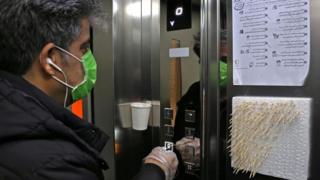
    An Iranian man uses small sticks to push the elevator button at an office building in Tehran on March 4, 2020

    Image copyright
    Getty Images

    Image caption

    Staff will go to great lengths to avoid touching buttons – this lift in Iran has been kitted out with small sticks for people to use

    “Many of us spend most of our waking lives in offices and typically they’re horrible,” says Maciej Markowski, chief executive of spaceOS, a start-up based in Warsaw.

    Before coronavirus offices were “a mix of noise, distraction and an endless search for a free meeting room,” he says.

    Mr Markowski’s company makes an app and other technology that connects tenants with their workplaces.

    He thinks that if building owners want to keep their tenants happy, then they need to be looking at different kinds of data.

    “The craziest thing is: corporate real estate is really data focused, you have tremendous information on occupancy, electricity and water usage,” says Mr Markowski.

    However, that “doesn’t give you a single clue what to do to keep a tenant, no idea what these people do in the building, what they like and dislike, any tools to keep them,” he says.

    With millions of people working from home since the coronavirus pandemic, office owners will have to work harder to tempt them back.

    Image copyright
    SpaceOS

    Image caption

    Maciej Markowski, chief executive of spaceOS

    Many staff are going to see big changes when they return.

    “I popped in last week for a few hours, and saw some Star Trek-style sensors you wave your hand over to exit, rather than pressing a button,” says Elizabeth Hoefsmit, managing director of Hampshire-based McGinley Aviation, which uses serviced offices in a business park.

    It might be infrared temperature checks in the lobby, contactless lifts, or new apps to spread workers out and keep shared surfaces clean, but there’s no doubt the post-coronavirus office is getting a drastic technological refit.

    More Technology of Business

    It could all start as soon as you wake up in the morning. You may check your building app, says David Garten, vice president at RXR Realty which owns and manages 93 properties in the New York area.

    The firm’s new app creates a building health index each day, from information like air quality, the number of occupants, and how well social distancing is being observed.

    If your building has a low rating that day, you might decide to work from home, or go to a smaller satellite office instead.

    The app will also tell you the ideal time to arrive, to reduce congestion, and people riding public transport at peak times. “So the ideal time for me to walk through our lobby is 10am,” says Mr Garten.

    Image copyright
    Getty Images

    Image caption

    Fever screening is a common sight

    Then on entering, you may pass through an infrared fever-screening system, says James Lawrence of Gensler, a large design and architecture firm based in San Francisco.

    FLIR Systems, one Oregon company that makes these crowd thermal cameras, has seen its demand increase 700%.

    If a concierge judges you high risk from the infrared screening, they might double-check your temperature with a handheld device. Then, you might need to have your meeting by video conference from a quarantine room, or take a car home or to hospital.

    If you make it through the lobby, then perhaps you will operate the lift with buttons on your app. Once upstairs, it will tell you when your workstation was last cleaned, Mr Garten says.

    When it gets to lunchtime, you’ll order food by an app, says John Robson, asset director at Workspace, which has 69 office properties around London focusing mainly on small companies.

    Image copyright
    Workspace

    Image caption

    Workers will probably have to spread out more

    “Every transaction is cashless now, and your food will basically be grab and go,” he says.

    If you pop to the loo after lunch, you’ll be increasingly looking at touchless taps, Mr Lawrence says.

    New software is helping companies spread people out.

    Gensler’s tool ReRun imports floor plans, calculates safe bubbles around each worker, and then outputs different ways to place workers so their bubbles do not overlap.

    “Recently we did an analysis on a two million square-foot building that took roughly 10 days to turn around. Otherwise it would’ve taken several weeks,” says Mr Lawrence.

    For the same reason, some companies are looking to teach artificial intelligence (AI) to video cameras.

    Image copyright
    Getty Images

    Image caption

    Artificial intelligence can look for office “pinch points”

    AI algorithms can offer feedback about “pinch points” where people are too close together, while protecting individual privacy, says Dr Mahesh Saptharishi, Motorola Solutions’ chief technology officer, based in Boston.

    Instead of watching the actual video, they can ask the AI how well social distancing is being observed overall, and where problem points are. “So employees don’t feel someone’s watching what they do,” he says.

    Meanwhile, your cleaner might well be employee of the month for many months to come.

    An April study in The Lancet Microbe showed the virus can last on plastic and stainless steel (like door handles) for up to seven days, and glass (like screens) for four days.

    Cleaning wipes can disrupt the layer of fat that surrounds and protects coronavirus. And bleach’s active ingredient sodium hypochlorite destroys the crown of protein spikes that gives the virus its name, and the ribonucleic acid (RNA) which is its blueprint to reproduce. So does the ethanol in surgical spirits.

    But it would be helpful to know which surfaces should be cleaned.

    Contact tracing needs to keep track of the surfaces and facilities you and sick colleagues used, says Matt Calkins, head of US software development platform Appian, which has also made coronavirus workplace safety software.

    If you know which of your rooms to target, you know where best to send your deep cleaning team, and maximise use of your bleach, ethanol and wipes, Mr Calkins says.

    The virus can also be carried in the air, on water droplets or fine dust particles, say researchers. So what about air conditioning systems?

    Image copyright
    Getty Images

    Image caption

    Office owners will be working hard to make their buildings attractive

    The UK government says the risk of air conditioning spreading coronavirus in the workplace is “extremely low”.

    Nevertheless, “we’re advising organisations to look at their air conditioning system,” says Dr Mark Parrish, Northern European medical director from International SOS, which advises companies about medical risks.

    Filters with extremely narrow openings – like high-efficiency particulate air (HEPA) and the more powerful ultra-low particulate air (ULPA) ones – can remove coronavirus from circulating in the air, according to UK air filter manufacturer SPCB.

    The problem is such ventilation systems will normally need stronger fans to push air through these narrower filters, it says.

    Upgrading air conditioning could be one of many options used by office owners to keep their tenants happy.

    Maciej Markowski of spaceOS says simple convenience might be the winning factor.

    “It’s ridiculous that you’re in a building and it’s easier to order food from across town than the restaurant downstairs. Or with three taps on your phone you can tell Amazon a package is broken, but there’s no way to tell your building there’s a huge spill in front of your office.”

  • Drone and light aircraft in ‘near miss’ outside Perth

    A drone

    Image copyright
    Getty Images

    Image caption

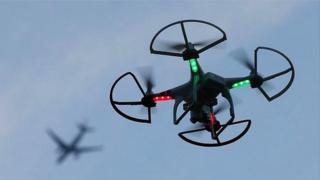
    A drone came close to a light aircraft near Perth Airport on Tuesday (Stock image)

    A drone put the occupants of a light aircraft “in danger of serious injury” after a near miss incident outside Perth.

    The aircraft almost collided with the drone at about 14:35 on Tuesday over Murrayshall.

    The plane was able to land safely at Perth Airport a short time later.

    The drone was described as being between one and two feet wide and red or orange in colour.

    Police Scotland are now trying to trace the drone’s pilot and establish the full circumstances that led to it operating within the restricted airspace around the airport.

    ‘Pilot responsibility’

    PC Scott Thomson said: “Thankfully, the aircraft was able to avoid a collision on this occasion, otherwise both people on board would have been in danger of serious injury.

    “We support the safe and legal use of small unmanned aircraft.

    “However, drone pilots are reminded they must operate within the law and guidelines set out by the Civil Aviation Authority and National Air Traffic Services.”

    He added: “It is the responsibility of each pilot to make themselves aware of the appropriate legislation and be aware of the importance of responsible flying, particularly around airports, restricted airspace and congested areas.

    “If anyone has any questions about how and where to fly a drone safely, please check with the Civil Aviation Authority or Drone Safe website.”

  • Hong Kong: Facebook and WhatsApp ‘pause’ police help

    The Facebook and WhatsApp logos are seen on a phone in this photo illustration

    Image copyright
    Getty Images

    Facebook and WhatsApp are “pausing” co-operation with requests for user information from the Hong Kong police.

    Several countries, including the UK, have criticised China for imposing new security laws, which they say threaten the territory’s long-standing autonomy.

    Facebook said it would stop considering the requests, “pending further assessment” of the human rights issues.

    No personal information about users in the region was held at or disclosed from its Hong Kong office, it added.

    “We believe freedom of expression is a fundamental human right and support the right of people to express themselves without fear for their safety or other repercussions,” Facebook said.

    • China warns UK over Hong Kong ‘interference’
    • Why Huawei’s days in the UK could be numbered

    WhatsApp – which is owned by Facebook – said it “believes in the right for people to have a private conversation online” and “we remain committed to providing private and secure messaging services to our users in Hong Kong”.

    Both platforms are blocked in mainland China but have benefited from Hong Kong’s much broader access to the internet under its freedoms as a special administrative region.

    What does Facebook give to police?

    WhatsApp has end-to-end encryption enabled by default – so it cannot read, or share with police officers, messages sent between two users.

    On Facebook Messenger, however, encryption is not the default option – it has to be manually switched on by users.

    Both platforms say they may disclose user data, in accordance with the law of the country in question.

    But WhatsApp adds successful requests for this information must meet “internationally recognised standards including human rights, due process, and the rule of law”.

    Media playback is unsupported on your device

    Media captionWhat is encryption?

    In the US, both platforms require a subpoena to provide “basic subscriber records” such as the person’s name, IP (internet protocol) address and email address.

    Extra information about the subscriber may require a court order.

    And a search warrant is needed for account contents:

    • On Facebook, that includes “messages, photos, videos, posts and location information
    • On WhatsApp, it means profile photos, contacts lists, and group information

    Hong Kong, formerly a British territory, was handed back to China in 1997, on the condition it would enjoy special freedoms for 50 years.

    The UK says China has now broken that agreement and is offering citizenship to as many as three million Hong Kong residents.

    Meanwhile, the United States – where Facebook is headquartered – is considering whether to remove Hong Kong’s favourable trading terms.

    The security laws introduce new crimes, including conspiring with foreigners to provoke “hatred” of the Chinese government or Hong Kong authorities, with penalties of up to life in prison.

    As soon as they came into effect, senior members of pro-democracy groups quit, fearing prosecution.

    And books written by pro-democracy activists have been removed from libraries.

  • Nintendo condemns alleged abuse in Smash Bros community

    A large figure of Mario wielding a fireball in front of a stage

    Image copyright
    Getty Images

    Image caption

    A giant Super Smash Bros figure is seen at Nintendo’s E3 2014 booth

    Nintendo has condemned alleged abuse by well-known competitive gamers as “absolutely impermissible”.

    In the space of a week, dozens of allegations of inappropriate behaviour have been made against competitors in Nintendo’s Super Smash Bros fighting game series.

    Several of the allegations involve young teenagers and older players.

    It comes as part of a wider “MeToo” style movement in the fighting game and wider gaming communities.

    The allegations surrounding the Super Smash Bros competitive community are wide-ranging, from inappropriate sexual messages to sexual relationships with minors on the sidelines of tournament events, and even accusations of rape.

    In a statement provided to the media, Nintendo said: “We are deeply disturbed by the allegations raised against certain members of the competitive gaming community. They are absolutely impermissible.

    “We want to make it clear that we condemn all acts of violence, harassment, and exploitation against anyone and that we stand with the victims.”

    Nintendo is not normally the organiser of such tournaments – instead, they are often organised by the community itself.

    Large numbers of competitors sometimes shared houses – which had included under-age players sharing accommodation with older ones.

    Many of the accused players have issued statements giving their own side of the story or refuting allegations made against them.

    However, several sponsors and brands have cut ties with well-known figures.

    Evo knocked out

    Separately, the largest fighting game tournament of the summer, EVO Online, did not go ahead as planned over the 4 July weekend, amid wider concerns of abuse in the fighting game community.

    Evo’s president, Joey Cueller, was accused of inappropriate behaviour involving under-age competitors.

    As a result, three major creators of fighting games – Bandai Namco, Capcom, and Netherrealm – all announced they were pulling out of the event, days before it was scheduled to begin.

    Mr Cueller “will no longer be involved with Evo in any capacity”, the organisation said in a statement.

    “Progress doesn’t happen overnight, or without the bravery of those who speak up against misconduct and injustice. We are shocked and saddened by these events,” it said.

    Mr Cueller, in a now-deleted tweet, wrote: ” I never meant to hurt anyone. I was young and reckless and did things I’m not proud of. I have been growing and maturing over the past 20 years, but that doesn’t excuse anything.”

    • Twitch starts banning users over abuse
    • Streamers call for a Twitch blackout

    The Evo Online event, scheduled to begin that weekend and run every weekend for several weeks, was cancelled.

    The current wave of allegations is not just confined to the fighting game community.

    Game streaming site Twitch has issued a wave of bans to its content creators after a surge in reports of abusive behaviour. And developer Ubisoft, known for the Assassin’s Creed series of games among others, has launched an internal investigation into the conduct of members of its staff.

  • Huawei: UK government weighs up ban of Chinese firm’s products

    Huawei logo

    Image copyright
    PA Media

    The government has received a report into Huawei that is likely to change its policy over the Chinese firm’s role in the UK’s telecoms networks.

    Digital Secretary Oliver Dowden said GCHQ’s National Cyber Security Centre had delivered its findings.

    NCSC is believed to have said it can no longer assure the security of Huawei’s products because of new US sanctions.

    “We’re now examining it and understanding the implications of it,” Mr Dowden told BBC Radio 4’s Today.

    Huawei has said it remains “open to discussions”.

    But one of the company’s spokesmen took a tougher line over the weekend, following newspaper reports that the government might ban the purchase of new Huawei 5G equipment by the end of the year.

    “UK policy is being dictated by [the] Trump administration… shouldn’t the US respect a United Kingdom in the post-Brexit era being in a position to chose its own telecommunication strategy?” tweeted Paul Harrison, Huawei’s head of international media, UK.

    And on Monday morning, China’s ambassador to the UK warned that if the country got rid of Huawei, it would send out a wider message about its openness to foreign investment.

    High-risk vendor

    Huawei’s role in the UK seemed to have been settled in January, when the government placed a cap on its market share in mobile and full-fibre fixed-line broadband networks, and excluded its involvement in the most sensitive parts of 5G known as the “core”‘.

    However, the US subsequently announced fresh sanctions that forbid the Chinese firm and the third parties that make its chips from using “US technology and software to design and manufacture” its products.

    Washington claims Huawei is backed by the Chinese military and poses a national security risk, claims the company denies.

    NCSC has examined the impact of the sanctions, including the fact that they effectively prevent the company from being able to use critical software to design and simulate chips before their fabrication, as well as stopping third-party manufacturers from being able to use equipment needed to produce some of Huawei’s most advanced processors.

    The risk is that as a consequence Huawei would have to start sourcing chips from elsewhere, which UK security officials might not be able to properly vet.

    “Clearly the US sanctions will present challenges and that is what that advice is about,” Mr Dowden told the BBC.

    He said a final decision had yet to be taken, but added: “We want to diversify away from these so called high-risk vendors, of which Huawei is is the principal one… we want to be in a position where we don’t have high-risk vendors in our networks at all.”

    Once the Department for Digital, Culture, Media and Sport delivers its conclusions to Prime Minister Boris Johnson, he will bring the matter before the National Security Council.

    Mr Dowden said he aimed to tell Parliament of any policy change before MPs rose for the summer recess on 22 July.

    ‘Bear the consequences’

    It remains unclear how far the government will go.

    The Sunday Times reported that BT and Vodafone had asked to be given until 2030 to remove Huawei’s equipment from their existing 5G infrastructure.

    But ex-Tory leader Sir Iain Duncan Smith told the BBC: “The government now must act and make sure that Huawei or any other untrusted vendor is never to be in our telecom system.”

    And one of his allies, Bob Seely MP, told the Telegraph: “2029 is going to be too long for some colleagues, who want to see Huawei out of the system by the end of this parliament.”

    In theory, the Prime Minister could decide to go further, ordering Huawei’s kit to be removed from 3G and 4G networks, and even the tens of thousands of roadside cabinets it is currently sits in providing broadband connectivity.

    But experts have warned that the cost of this would run into “billions of pounds” and would cause major delays to the rollout of full-fibre internet.

    Image copyright
    Getty Images

    Image caption

    Ambassador Liu Xiaoming said a rejection of Huawei would send a “very bad message”

    China’s introduction of a controversial security law giving it new powers over Hong Kong, and the subsequent arrest of some pro-democracy protesters may put the prime minister under further pressure to take a tough stance.

    Former Labour business minister Peter Mandelson said the forthcoming US sanctions – which are due to come into effect in September – provided “a cover” for the UK to change its position.

    “President Trump has undoubtedly succeeded in overturning the government’s original decision about Huawei equipment in Britain’s 5G network,” he added.

    “This is fundamentally not a question of security. It’s a commercial war between the US and China.

    “President Trump said he wanted to demolish Huawei, and he’s doing so through very draconian sanctions.”

    But Nigel Inkster, the former director of operations at MI6, told the BBC that the UK needed to avoid becoming “collateral damage” of a clash between the two superpowers.

    “It’s going to be very important for the UK to manoeuvre adroitly to ensure that we don’t get forced into making a binary choice in this area, in ways that could be very detrimental to our long-term interest,” he said.

    When questioned about the issue, China’s ambassador to the UK said the wider Chinese business community was watching to see how the UK handled the case.

    “We want to be your friend. We want to be your partner,” added Liu Xiaoming.

    “But if you want to make China a hostile country, you will have to bear the consequences.”

    On Thursday, MPs will discuss the issue further at the House of Commons science and technology committee when it questions Huawei, Vodafone and BT about the implications of a potential ban.

  • Robotic scientists will ‘speed up discovery’

    Media playback is unsupported on your device

    Media captionMeet the socially distant robot scientist

    Scientists at the University of Liverpool have unveiled a robotic colleague that has been working non-stop in their lab throughout lockdown.

    The £100,000 programmable researcher learns from its results to refine its experiments.

    “It can work autonomously, so I can run experiments from home,” explained Benjamin Burger, one of the developers.

    Such technology could make scientific discovery “a thousand times faster”, scientists say.

    A new report by the Royal Society of Chemistry lays out a “post-Covid national research strategy”, using robotics, artificial intelligence and advanced computing as part of a suite of technologies that “must be urgently embraced” to help socially distancing scientists continue their search for solutions to global challenges.

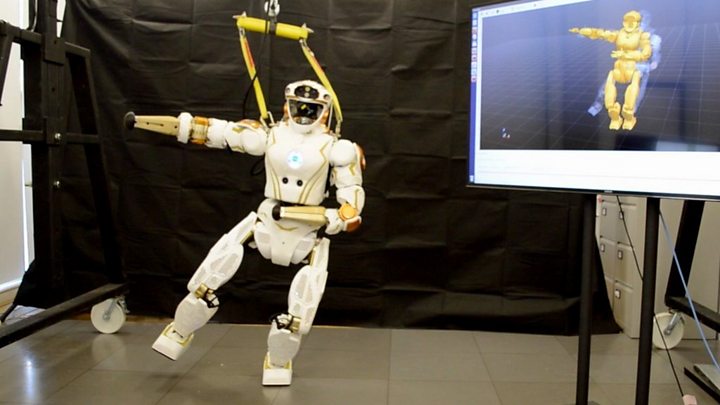
    • Nasa humanoid starts work in UK lab
    • Will coronavirus speed up the use of robots?

    Robo-chemist

    Image caption

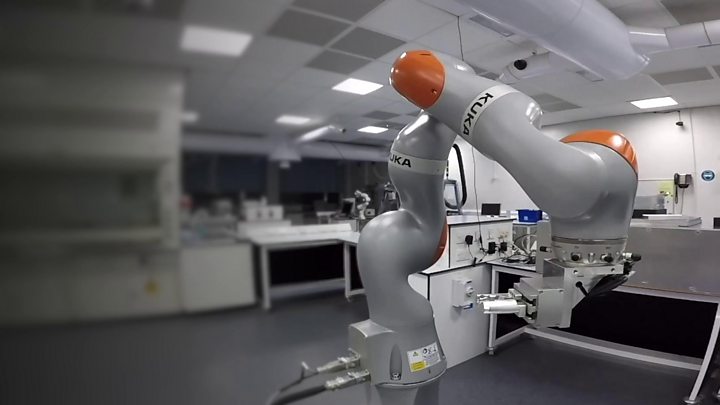
    Robo-chemist at work in the Liverpool lab

    The robotic scientist is currently embarking on a series of tests to find a catalyst that could speed up the reaction that takes place inside solar cells.

    But it could, according to Prof Andy Cooper, the materials scientist who has put the robot to work in his lab, be used in the fight against Covid-19.

    “We’ve had a lot of interest [in the robot] from labs that are doing Covid research,” he told BBC News.

    “Covid, climate change – there are lots of problems that really need international co-operation. So our vision is we might have robots like this all across the world connected by a centralised brain which can be anywhere. We haven’t done that yet – this is the first example – but that’s absolutely what we’d like to do.”

    Socially distant science

    Today, in a world where scientists also need to limit their time in the lab and maintain social distance from each other, the robo-scientist has come into its own.

    “It doesn’t get bored, doesn’t get tired, works around the clock and doesn’t need holidays,” Dr Burger joked.

    On a more serious note, he said that the robot had transformed the speed at which he could carry out research. “It can easily go through thousands of samples,” he said, “so it frees up my time to focus on innovation and new solutions.”

    Like robotics designed for research in Space, machines like this could also take on riskier experiments – in harsher laboratory environments or using more toxic substances.

    Media playback is unsupported on your device

    Media captionNasa’s humanoid is designed for more hazardous environments

    That, according to Deirdre Black, head of research and innovation at the Royal Society of Chemistry, is why UK science needs to build new technologies into its infrastructure.

    “This is about human beings harnessing all of these digital technologies, so that they can go faster – discover and innovate faster and explore bigger and more complex problems, like decarbonisation, preventing and treating disease, and making our air cleaner,” she told BBC News.

    So does this mean that while many scientists have been in lockdown, the machines have come to take their jobs?

    “Absolutely not,” said Dr Black. “Science will always need people”.

    Follow Victoria on Twitter

  • Coronavirus: Fujitsu announces permanent work-from-home plan

    The logo of Japanese multinational information technology equipment and services company Fujitsu is seen on a skyscraper in Munich.

    Image copyright
    Getty Images

    Technology firm Fujitsu has said it will halve its office space in Japan as it adapts to the “new normal” of the coronavirus pandemic.

    It says the “Work Life Shift” programme will offer unprecedented flexibility to its 80,000 workers in the country.

    Staff will be able to work flexible hours, and working from home will be standard wherever possible.

    The announcement follows a similar move in May by social media platform Twitter.

    In a statement sent to the BBC, Fujitsu said it “will introduce a new way of working that promises a more empowering, productive, and creative experience for employees that will boost innovation and deliver new value to its customers and society”.

    Under the plan employees will “begin to primarily work on a remote-basis to achieve a working style that allows them to flexibly use their time according to the contents of their work, business roles, and lifestyle”.

    The company also said that the programme will allow staff to choose where they work, whether that is from home, a major corporate hub or a satellite office.

    Fujitsu believes that that the increased autonomy offered to its workers will help to improve the performance of teams and increase productivity.

    Sree Sreenivasan, a Marshall Loeb Visiting Professor of Digital Innovation at the Stony Brook University School of Journalism, said the announcement underlines the huge long-term impact of the pandemic on the way many of us work.

    “This is yet another sign that everything we know about offices and the future of work is being upended. Thousands of employers and millions of employees are learning the pros and cons of the new normal.”

    “If they can combine the best of the pros (less commuting, more productivity, less expenses, etc), while minimising the cons (lack of in-person bonding, never being off the clock, etc), millions will be grateful, while frustrating thousands who preferred the old way of life,” he added.

    • Twitter allows staff to work from home ‘forever’
    • Facebook and Google extend working from home

    In May, Twitter told staff that they can work from home “forever” if they wish as the company looks towards the future after the coronavirus pandemic.

    The social media platform said: “The past few months have proven we can make that work. So if our employees are in a role and situation that enables them to work from home and they want to continue to do so forever, we will make that happen.”

    Earlier that month Google and Facebook said their staff can work from home until the end of the year.

    Google originally said it would keep its work from home policy until 1 June, but extended it for seven more months.

    Its announcement coincided with a similar move by social media giant Facebook.

  • The gaming boss who gets addicted to the games

    Andrew Day

    Image copyright
    Sara Lando

    Image caption

    Andrew has expanded Keywords’ workforce from 50 to 7,500

    The BBC’s weekly The Boss series profiles different business leaders from around the world. This week we speak to Andrew Day, chief executive of computer games developer Keywords Studios.

    Andrew Day knows from personal experience just how addictive some computer games can be.

    “I have one of those horrible personalities, that if I open a game, I find, before I know where I am, that I have spent tens of hours on it,” says the 56-year-old.

    “Back in 2013… I went for a little break, I was lying beside a swimming pool with nothing to do. So I picked up my phone and started playing Candy Crush.

    “That was in June. I had to give it up in my New Year’s resolutions the following year, because I was just losing so much time on the game. So yes, I have to be a little bit careful.”

    Image copyright
    Getty Images

    Image caption

    Candy Crush is one of a great many games that Keywoods has worked on

    Andrew is chief executive of Irish company Keywords Studios. Even if you are an avid gamer, you might not have heard of the Dublin-based firm.

    However, the business has helped make many of the world’s most popular games – from Call of Duty, to World of Warcraft, Fortnite, Clash of Clans, League of Legends, Assassin’s Creed, and the aforementioned Candy Crush.

    “The full list of games we have worked on is slightly infinite,” says Andrew.

    Keywords employs 7,500 people at 59 offices around the world, from Montreal to Tokyo, and in 2019 it had annual revenues of €326.5m ($369m; £295m).

    The business remains under the radar because it doesn’t release games under its own name. Instead it is employed by the world’s largest gaming companies to help them make their products.

    It does everything from produce whole games, to parts of them, or handling the transfer from one platform to another, such as making an Xbox game work on a PlayStation.

    Or it will design and make all the visual aspects of a game, everything you see, such as the characters, the buildings and weapons. “All of those are digital assets, and they get produced by artists, and we are the largest providers of video games art in the world,” says Andrew.

    Image copyright
    Keywords Studios

    Image caption

    Keywords has staff around the world, including at its office in Mexico City, pictured

    In addition, Keywords offers a testing service for nearly completed games, to check that they work correctly. And it has an audio business whereby actors – famous or not so famous – provide a game’s voices and dialogue, and it adds all the music and sound effects.

    Further, the company is the world’s largest provider of games translation services – converting games into 50-plus languages.

    Then after a game has been released, Keywords has staff who offer customer support under a client’s name. So if you phone a gaming company demanding help to get you to the next level, you may actually be put through to Keywords employees.

    It is a big operation for Andrew to lead, and while coronavirus has temporarily clipped his wings, he typically spends “half my time” travelling around the world.

    It is a far cry from Keywords’ humble beginnings in 1998, when a friend of Andrew’s, Giorgio Guastalla, set up a small firm in Dublin offering translation services to business software providers. It grew slowly until Andrew was asked to join and lead the company in 2009, by which time it was solely operating in the gaming sector.

    Image copyright
    Getty Images

    Image caption

    Keywords has been helped by the growing popularity of computer games

    “He had been asking me for a number of years, he thought I could really grow and make something of the business,” says Andrew. “At the time it was just 50 people in an office in Dublin.”

    Andrew was born and raised in South Africa. He and his family moved to the UK when he was 16, settling close to London. After gaining a management degree from Bradford University, he then had a varied career in business.

    He started working for cigarette firm Rothmans, before moving into mergers and acquisitions in a number of industries, and then finally specialising in the technology sphere.

    Andrew’s plan for Keywords was big expansion, helped by using his knowledge of organising takeovers to buy firms, which would allow the business to expand the services it could offer gaming companies. His joining the business also happily coincided with the huge growth in popularity of computer games over the last decade.

    Image copyright
    Getty Images

    Image caption

    Andrew hopes that Keywords will become a €1bn business

    To accelerate its growth and acquisitions, in 2013 Andrew floated Keywords on the London Stock Exchange’s AIM market, which raised some £30m.

    “It has been a rare example of spotting an opportunity, having that vision, then creating a business plan and following it religiously,” says Andrew.

    Technology sector analyst Patrick O’Donnell of Irish stockbrokerage Goodbody, says, “Andrew Day has been critical for Keywords.

    “Keywords has completed over 40 acquisitions under Andrew’s leadership, and is now clients to 23 of the top 25 global video gaming publishers, and all top 10 mobile game developers,” he says.

    More The Boss features:

    These companies all use Keywords because it is cheaper and more convenient for them to give it work to do it rather than employ vastly more staff in-house. “We get projects to do,” says Andrew. “So if the gaming firms did this work in-house, at the end of a certain project they could have staff just sitting around.”

    Andrew says that Keywords has no plans to ever release its own games, or as he puts it, “bite the hands that feed it”. Instead he thinks the firm will grow to see annual sales of €1bn, such is the growing demand for its services, from a gaming industry with total revenues of more than $159bn (£127bn) per year.

    He is, however, still wary of playing the games himself. “I find it hard to put a game down. I want to complete it, to move to the next level. Or if I’m playing the same level over and over again I want to do it faster, or jump higher, or catch more coins. It appeals to my personality rather sadly.”